Postgraduate Studentships - Search for funding opportunities.




Postgraduate Studentships - Search for funding opportunities.

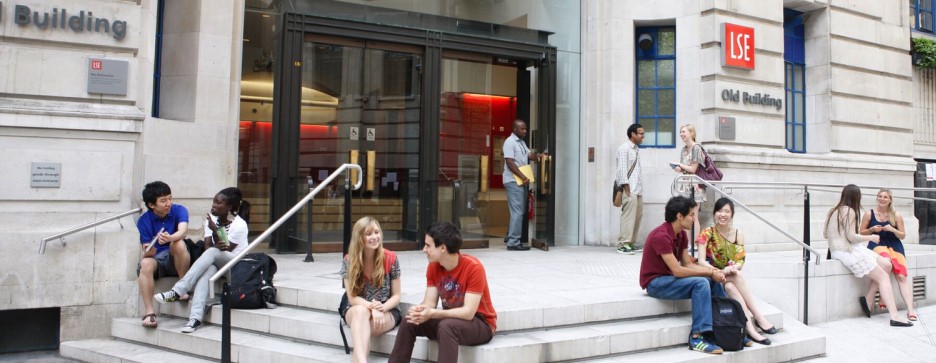


We are delighted to award our Masters Compare Scholarship for 2025-26 to Lara Rowe. Lara is studying part-time for an MSc in International Social and Public Policy (Research) at London School of Economics and Political Science (LSE). Lara started her masters this September 2025.
I studied Politics, Philosophy and Economics with International Study at the University of Manchester, graduating in summer 2024. My degree focused on feminist politics, human rights and challenges of power, applying egalitarian theory to research projects centered around the everyday wellbeing of people. I found my undergraduate degree very fulfilling. More than anything, it was the process of writing my dissertation in my final year that cemented the feeling that I wasn’t quite done with academia.
When I started my first full-time job after university, I began thinking more seriously about what I wanted my career to look like. I realised I wanted to incorporate my love for academia, which I was being consistently drawn back to. I especially wanted to further my knowledge of feminist approaches to politics with a commitment to tangibly improving public life. Policy seemed to be a good career fit for these ambitions. I believe that academic research and strong theoretical foundations can contribute to meaningful real-world change, particularly in policy.
I love studying political theory, although I also wanted to build on my practical and analytical research skills. I felt this would improve my career prospects in the policy sector, whilst also pushing me to learn something completely new. This desire to learn more, and increased clarity about my future career goals pushed me towards a Masters.
I considered several universities, but was drawn to LSE’s interdisciplinary approach to policy and the prospect of studying part-time in London.
I found the Social Policy department at LSE very impressive. There are several professors at LSE whose interests and values align strongly with my own. I also appreciate LSE’s international outlook – as an institution, it is acutely aware of how international politics impacts local politics, something I am particularly interested in.
Additionally, the Social Policy department houses several research centres, including the Global Sexual and Gender Identities Policy Lab, the International Inequalities Institute and the Centre for Analysis of Social Exclusion, which offer extensive opportunities to discuss and develop my ideas, whilst engaging with projects that have real-world impact. This is alongside the amazing events and talks that LSE host.
The deciding factor though, was the ability to study part-time in London, which meant I could stay in my current role and spread out the cost of fees. Although I had offers from other universities, they did not offer the same flexibility, making a master’s significantly less affordable. LSE’s part-time structure ensures I can continue to work, spread out the cost of fees and engage in all that London and LSE have to offer!
I spent a very long time looking over different courses, torn between those which were more theory-heavy and those that were hands-on. The MSc in International Social and Public Policy immediately struck me as an ideal mix between both.
I chose the Research stream, because it offered the opportunity to gain solid skills in quantitative and qualitative analysis – something I felt I had been missing for a career in policy. However, the course still had plenty of room to explore theoretical questions, particularly those related to power, knowledge and language in policy. I am really looking forward to diving into these more over the next two years.
Yes! I am continuing to work whilst I study, thanks to the part-time structure. I have spent the last eight months working full-time in the non-profit sector, which has allowed me to save up to contribute to this Master’s.
I am very lucky that my workplace has been incredibly supportive about me going back to university – allowing me to continue working full-time with flexible hours this term, and to drop my hours to part-time in January, when my university workload ramps up.
Taking the course part-time means I can spread the cost of my fees whilst working to afford the course. Without this option, I wouldn’t have been able to take on the Master’s.
A big bonus of going to LSE is the social aspect of studying in central London. There is so much on offer both within the university and in the wider city, and I am looking forward to continuing to take advantage of that. At the moment, I play football for a grassroots team in South London, and I am also part of a community radio station, which has been great.
Having the part-time flexibility has made this much more feasible, and I am also so grateful to have two more years with all the university facilities.
The scholarship means a lot to me, and I am so grateful for the opportunity. This has provided me with the breathing room to fully immerse myself in my course. With the support, I can comfortably reduce my working hours, giving me more time to commit to the MSc and work towards my career goals. Especially with the rising cost of living in London, the scholarship has had a massive impact, and I am so thankful.
Thank you so much again for this amazing support, it really will make all the difference.