Postgraduate Studentships - Search for funding opportunities.




Postgraduate Studentships - Search for funding opportunities.



 Study Details: 1 year
Our MSc Artificial Intelligence for Science course explores the theoretical and practical skills needed to use artificial intelligence to solve scientific problems.
This course offers a unique opportunity for students from diverse scientific backgrounds to gain insights across disciplines in the Faculty of Science, with teaching spanning the Schools of Biosciences, Psychology, and Mathematical and Physical Sciences. It’s designed for science graduates looking to develop skills in artificial intelligence and machine learning, as well as engineering graduates looking to apply their software engineering skills in a scientific field.
You’ll develop an understanding of how to apply techniques from artificial intelligence, machine learning, data engineering and data science; learning how to use computer programs to address scientific problems in relevant languages such as Python and R. You’ll also gain experience in data analysis and visualisation, using appropriate software to discover, interpret and evaluate the data patterns emerging from research.
You’ll build upon this knowledge by investigating the major trends and contemporary issues related to applying artificial intelligence to problems arising within science; honing your critical thinking abilities as you examine ethical, social and environmental considerations.
You'll gain specialist knowledge and skills relevant to your interests and career aspirations through a range of optional modules, allowing you to focus on the topics that are most important to you. You’ll have the opportunity to choose from topics such as advanced statistical methods, computational modelling and the applications of artificial intelligence for science.
One of the biggest parts of your degree is your dissertation. You’ll carry out a computational research project, either independently or as part of a small team contributing to a larger research challenge. Working under the guidance of an academic supervisor, you’ll produce an original piece of research, with the opportunity to choose from a diverse range of topics across science. You’ll review research literature, plan and conduct research, analyse data, and gain experience communicating your findings verbally and in writing.
Minimum 2:1 undergraduate honours degree in a relevant subject.
This course is designed to give you the skills that will help you succeed in the field of artificial intelligence applied to science.
You’ll develop the ability to plan and manage a research project, equipping you with a solid foundation for pursuing a career in academic or industrial research. You’ll also master the data analysis and advanced problem solving skills needed for a variety of careers in roles such as software engineering or data science.
Core modules:
AI and machine learning for science: From theory to application
AI-Augmented Scientific Discovery: Frontiers and Issues
Data Analysis and Visualisation
Ethics of Artificial Intelligence and Contemporary Technology
Research Project in AI for Science
Optional modules:
A student will take 15 credits (one module) from this group.
Time Series
Neural Dynamics and Computation
AI Applications in Biosciences
Optional modules:
A student will take 15 credits (one module) from this group.
Bayesian Statistics and Computational Methods
Advanced Statistical Methods for Psychologists
Neurocognitive Modelling
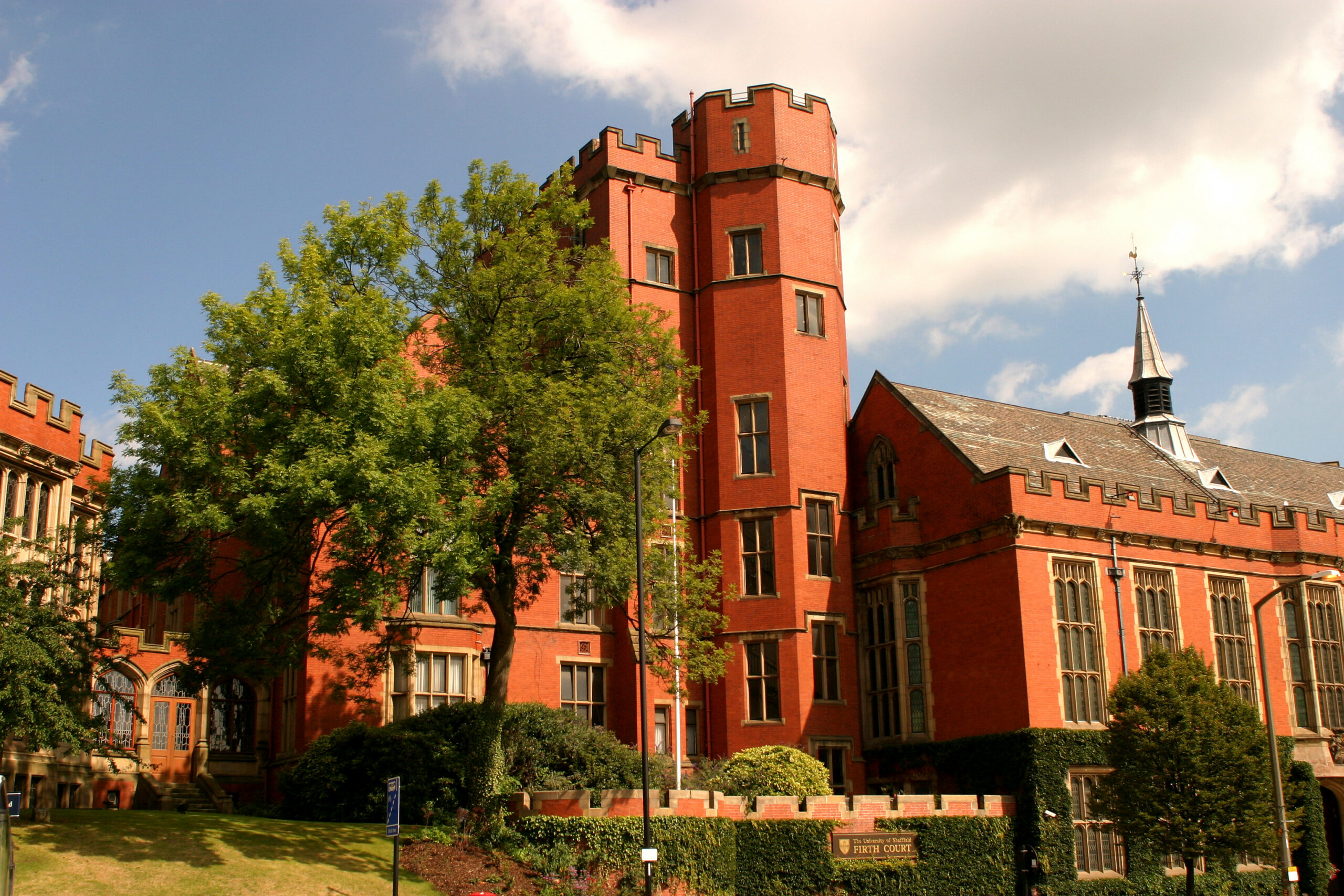
A QS world top-100 university Studying at the University of Sheffield means you’ll get the future that follows a degree from a Russell Group Universit...


