Postgraduate Studentships - Search for funding opportunities.




Postgraduate Studentships - Search for funding opportunities.

 Study Details: 1 year
This course will build your knowledge of key environmental systems and processes while developing your ability to engage critically with contemporary environmental debates. Lectures, seminars and interactive discussions will provide you with a strong theoretical foundation. Building on this, the course focuses on developing enhanced data skills so that you can collect and analyse complex environmental data to back up hypotheses with scientific insight.
Hands-on learning will form a key element of your study experience - computer labs, fieldwork and laboratory sessions will give you practical experience in geospatial analysis, environmental monitoring and quantitative methods. You’ll apply these skills in real-world contexts and gain confidence in designing and conducting independent research projects under expert supervision.
An advanced research project will give you the opportunity to carry out an original study that integrates all your learning. Tailored tutorials and career guidance focus on preparing you for professional opportunities in environmental consultancy, policy, research and sustainability-focused industries worldwide.
We focus on the development of practical skills that are highly valued by employers from across the environmental sector, including geospatial programming, sensor deployment and machine learning - giving you the skills and knowledge to monitor the environment at scale.
We use an approach designed to deliver contemporary skills needed for our fast-changing world, for those who seek careers that tackle the climate crisis and natural hazards. You will be taught by world-leading experts in climate change, glaciology, volcanology, environmental hazards and climate adaptation.
Whether you're a graduate with a background in science, social science or engineering, or a professional wanting to retrain, this MSc could prepare you for the next step in your career. Our course welcomes applicants from diverse backgrounds who are eager to tackle today’s most pressing environmental challenges.
We welcome applicants with degrees in STEM subjects (for example environmental science, Earth science, the sciences) and quantitative social sciences (for example geography, economics, sociology) and professionals who want to upskill their data analysis skills.
Minimum 2:1 undergraduate honours degree in a relevant subject.
Graduates from this course could go onto careers in the environmental sector, data analysis, Geographic Information Systems, research and beyond.
We’re proud of the success of our alumni who have studied with us over the last two decades and have gone on to have tremendously successful and diverse careers, including:
Core modules:
Geospatial Programming Essentials
Horizons in Environmental Change
Monitoring Our Changing Environment
Designing Environmental Change Research Core modules:
Machine Learning for Environmental Change
Climate Change: Science and Impacts
Environmental Applications of GIS
You will also take one optional module from the following:
Managing Climate Change
Theory and Debates in Food Security and Food Justice
Advanced Spatial Analysis
The Urban Climate Emergency Core module:
Advanced Research Project
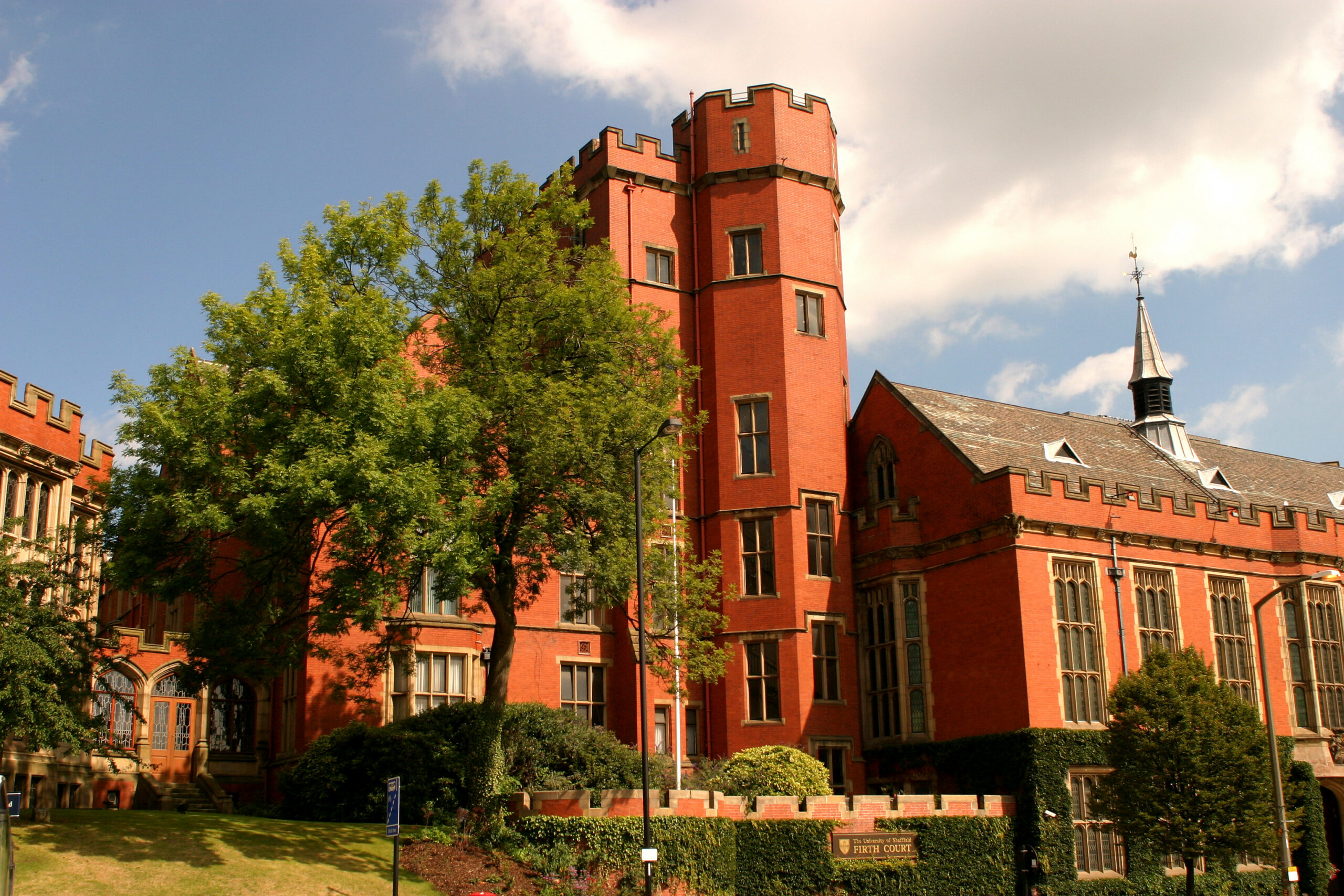
A QS world top-100 university Studying at the University of Sheffield means you’ll get the future that follows a degree from a Russell Group Universit...


 Wed 29 Apr 2026