Postgraduate Studentships - Search for funding opportunities.




Postgraduate Studentships - Search for funding opportunities.



 Study Details: Full time 1 year
If you aspire to lead the future of finance, our MSc Financial Technologies and Artificial Intelligence (AI) is designed for you. The programme’s versatile curriculum will open doors to many high-value professions at the intersection of finance and technology, where expertise in AI and financial innovation is increasingly rewarded.
MSc Financial Technologies and AI is a unique programme that combines classical quantitative finance techniques with cutting-edge developments in financial technology and big data analysis, including machine learning and AI. The curriculum bridges financial theory with practical applications in quantitative trading, risk management, and forecasting. Graduates can pursue prestigious roles such as quantitative traders, risk managers, data scientists, and financial researchers at leading investment banks, hedge funds, and FinTech firms.
You will develop quantitative trading skills, employing sophisticated strategies that leverage the power of data and technology. You will master financial and quantitative risk management tools, learning to identify, analyse and manage risks. You will learn to conduct rigorous simulation analyses and stress tests, ensuring resilience and strategic foresight in decision-making. You will also discover pioneering methods to predict financial and economic trends using AI-driven tools and techniques, all tailored to the world of big data.
This programme will help you build a deep understanding of financial markets and key financial instruments and their pricing techniques. You will learn how to develop and price new financial instruments and quantitatively assess their risks. You will gain expertise in modelling financial processes and will be able to apply this knowledge to empirical asset pricing and risk management.
You will get comprehensive training in data analytics tools, machine learning techniques, and AI applications for financial data analysis, including big and high-frequency data. You will also become familiar with alternative asset classes such as hedge cryptocurrencies and their associated risks. You will gain practical experience in programming languages (eg, Python and R) and you will work with key financial databases such as DataStream and Bloomberg.
These combined skills will enable you to perform comprehensive financial and quantitative analysis from model development through testing and implementation using real data.
During the taught part of your master’s programme, you will take six core modules, developing your skills and knowledge in financial technologies and data analysis. One core module is a transferrable skills module, which develops your soft skills, database management skills, and coding skills. You will also take one optional module, which allows you to tailor your degree to your personal interests.
In the summer, you will integrate all your acquired knowledge in an individual research-driven dissertation project. This project provides hands-on experience with real-world quantitative research while developing your research planning, time-management and written communication skills.
2:2 Hons degree (UK or equivalent) in Finance/Economics with strong quantitative components, or STEM (Mathematics, Engineering, Physics, Computer and Data Science, and related disciplines).
Students with other business, social and natural science related degrees are encouraged to apply, provided they can demonstrate strong quantitative skills.
We assess applicants based on their overall academic performance, typically putting more emphasis on strong results in quantitative modules. Relevant work experience and/or significant programming skills are also viewed favourably.
MSc Financial Technologies and AI prepares you for diverse career paths across the global financial sector. Our alumni can target work in prestigious organisations, including:
The roles our graduates can pursue include:
Graduates can also choose to continue into PhD programmes or establish their own fintech ventures.
Core
Data Analytics for Finance and Investments
Asset Pricing and Investments
Financial Technologies
Big Data, Machine Learning and Financial Econometrics
Risk Management and AI
Career Accelerator: Technical Toolkit and Professional Development
Dissertation
Optional
Advanced Investments
Derivatives Modelling
Architecting Secure Information Systems
Stochastic Calculus for Finance
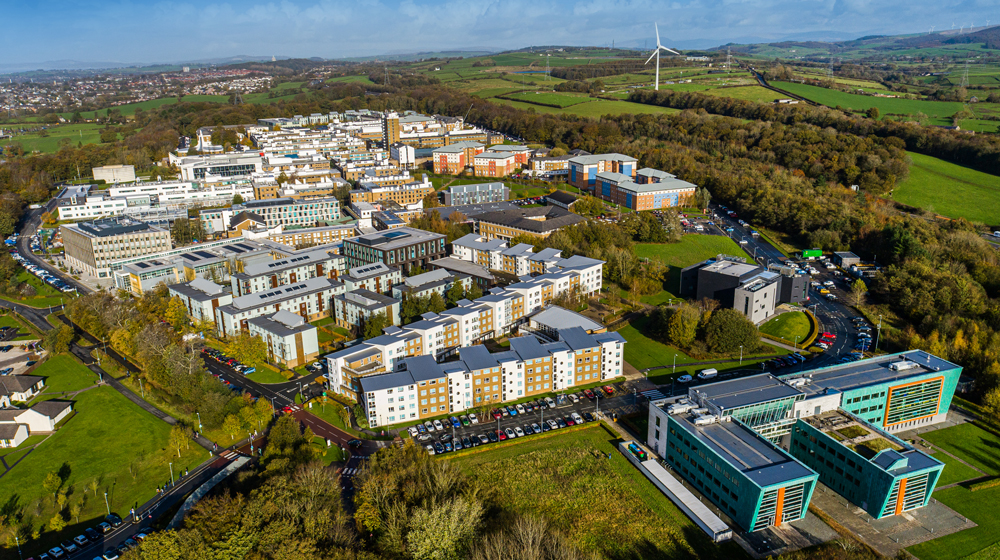
Global reputation and research excellence Lancaster is a top 10 UK university (Complete University Guide 2026) set on a 578‑acre parkland campus in n...

 Sat 27 Jun 2026