Postgraduate Studentships - Search for funding opportunities.




Postgraduate Studentships - Search for funding opportunities.


 Study Details: 2 years full-time
Find out about courses, learn about the application process, and discover how we can help you achieve your professional goals.
This programme is taught through the medium of English but you can read about the course in Welsh here.
This course is also available as a MSc. The Dissertation for the full MSc is additional to the 2 years funding.
The main aim of this programme is to produce graduates who are fit for practice and eligible to apply for registration with the Health and Care Professions Council (HCPC) and membership with the professional, educational and trade union body, the Chartered Society of Physiotherapy (CSP).
The programme offers a challenging and rewarding educational experience that enables the student to develop as a competent physiotherapy practitioner, who places the patient at the heart of care and is capable of making a valuable contribution to the workplace. The programme will develop students’ understanding of physiotherapy theory as well as hands-on practice and will be rooted within the School of Health Sciences with its track record of excellence in research. This will ensure that the student develops an appreciation of evidence-based and innovative practice across a range of physiotherapy roles including in rural healthcare.
Students having successfully completed the Post Graduate Diploma in Physiotherapy will be able to develop their knowledge and skills through the successful completion of the dissertation which is the final stage of the Master’s degree and will provide the student with the opportunity to demonstrate the skills and knowledge to organise and conduct a research project or systematic review. The innovative educational approach to the programme will develop creative, skilled physiotherapists who will be able to pursue a career across a range of health and care settings.
Bangor University has strong links to the local healthcare authorities in North Wales and these will increase with the development of this programme. Opportunities exist, therefore, for graduating students to benefit from this; in addition to the many other fields where physiotherapists are in demand such as in private practice, sporting and military settings.
If you are considered a home UK student for tuition fees who can commit to working in Wales for two years after graduating, you could get your tuition fees covered in full through the NHS Wales Bursary Scheme and claim for a £1,000 bursary contribution towards living costs. You can also apply for the means tested bursary that is dependent on household income and other funding that has eligibility criteria for childcare support, dependents allowance and parental learner allowance. As this course is funded by NHS Wales, students will agree to commit to working in Wales for two years after graduating.We do not accept self funding students and are unable to accept applications from overseas students.
All entry requirements carry the same weighting and must be met prior to applying for this programme. Please ensure each entry requirement is accounted for in your personal statement.
Please note: this programme is not currently available for international students.
The School requires all candidates to undertake an enhanced criminal record check. The criminal records check will include an enhanced DBS check for the child and adult workforce including a check of the barred lists. Applicants who have lived or worked outside the UK are also required to undertake a criminal records check in their countries of residence.
As a career, physiotherapy represents an attractive profession which offers a wide range of flexible employment opportunities upon graduation.
Physiotherapists work in a variety of specialisms across the profession; ranging from delivering treatment as an active practitioner or being involved in education, research or management. Once registered with the HCPC, physiotherapists have the option of working within the UK National Health Service (NHS), or of pursuing a career within alternative healthcare environments such as in private practice, sport or the military for example.
The aim of this course is to develop autonomous postgraduate physiotherapists with the appropriate professional knowledge and skills, who will have a vital role in the National Health Service (NHS) and other organizations, locally and within the United Kingdom (UK).
Programme objectives
The learning outcomes for the programme foster the development of students into competent, reflective Physiotherapists who are able to:
Intended programme outcomes
The programme draws upon relevant contemporary policy and academic research, applied to the UK and internationally. The programme outcomes are a statement of what graduates should know and be able to do on completion of the programme.
This specification provides a concise summary of the main features of the programme and the learning outcomes that a student is reasonably expected to achieve and demonstrate if they take full advantage of the learning opportunities provided.
The Programme provides opportunities for students to develop:
Overall, the intended outcomes are summatively assessed through assignments, in the form of essays, examinations, reports, research proposal, and individual and group presentations. The individual modules have varying degrees of formative assessment.
The choice of teaching methods used on the course has been influenced by the basic principle of adult learning, which is most effective if it is linked with the students’ existing experiences and demands their participation in the learning process.
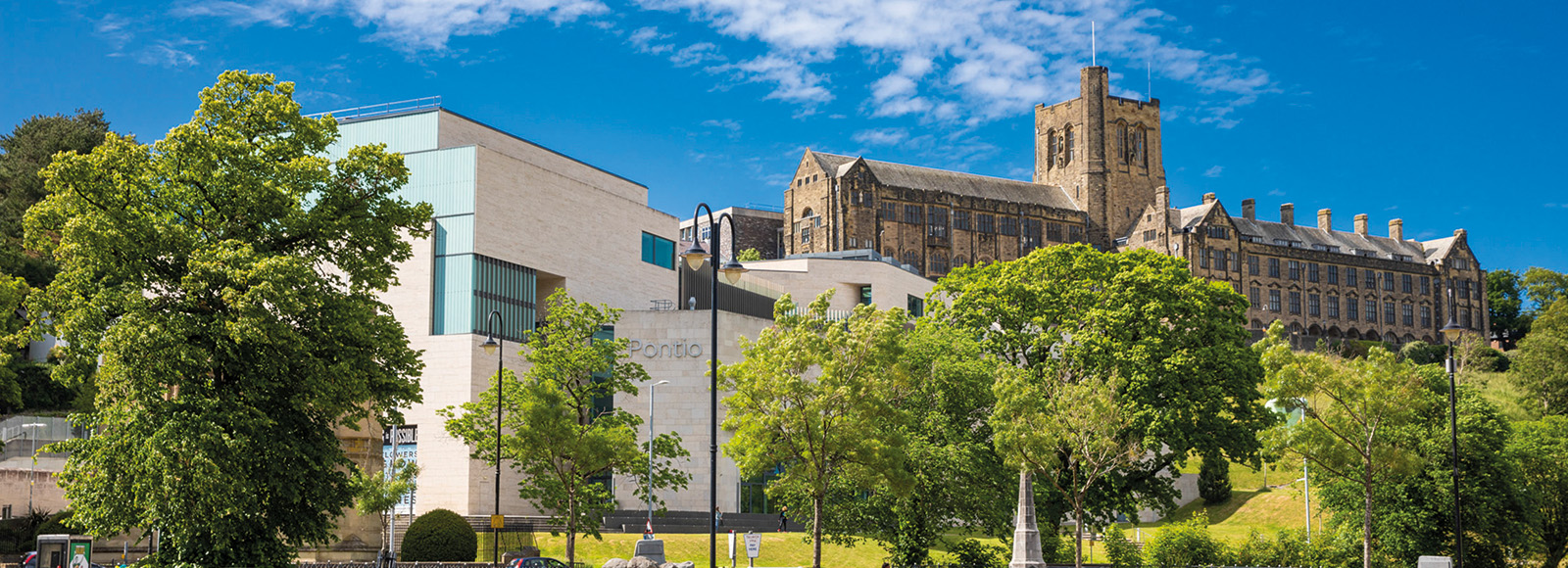
Your Future in Action. Nestled between the mountains and the sea in North Wales, Bangor University offers a postgraduate experience shape...


