Postgraduate Studentships - Search for funding opportunities.



Postgraduate Studentships - Search for funding opportunities.
 Study Details: MSc 1 Year Full-Time, 2 Years Part-Time
What are the benefits of different approaches in counselling and psychotherapy? Find out as you explore contemporary creative and verbal approaches to psychotherapy.
We offer a practical approach to training suitable for new and advanced practitioners. You’ll explore the benefits of creative arts as therapy. See how to use drawing, painting, guided imagery, movement, drama, writing, poetry and sculpture. We offer a financial contribution of up to £1,200 towards the cost of personal therapy and clinical supervision.
Our two-year psychotherapy and counselling Masters draws upon psychology, neuro-psychotherapy, neuroscience and biosciences to reflect the scientific content required in psychotherapy training. You’ll also look at developmental psychology, humanistic and attachment theories, and abnormal and clinical psychology.
We’ll support you to work at emotional depth with people in psychological distress as you develop your practice. You’ll work with children, young people and adults in a series of work placements and experiences. Graduate with the expertise you need to pursue professional accreditation.
You should have a degree equivalent to UK first-class or upper second-class honours (2:1 or above) in either counselling and/or psychotherapy or a cognate discipline which has a focus on supporting and developing individual growth and expression and psychological mindedness. Relevant subjects include care work, community arts, dance, education, music, nursing, psychology, social work, sport, theatre studies or visual arts.
Students with lower degree classifications and/or demonstrable practice experience may be admitted at the faculty’s discretion, subject to the production of additional written evidence of your ability to study at Master’s level.
Ideally, you should have at least 50 hours of paid or voluntary experience working with clients from vulnerable populations, experiencing issues relating to emotional and mental wellbeing, as well as working creatively with diverse arts media and/or demonstrating an interest and curiosity in engaging with the creative process.
Your application should demonstrate both creative and psychotherapeutic skills and qualities:
Creative skills in any art form and, if relevant, the use of these skills with vulnerable populations;
Your understanding of psychotherapeutic qualities such as warmth and compassion.
Owing to the demanding nature of the course, if you accept an offer from Edge Hill University you will be required to complete a medical questionnaire. In exceptional circumstances you may need to have a medical examination in order to establish your medical fitness.
If you accept a formal offer from Edge Hill University you will be required to apply for a Disclosure and Barring Service (DBS) Enhanced Disclosure indicating that you meet the mandatory criteria of ‘Clearance to Work with Children and/or Vulnerable Adults’. Further information will be sent to you after you have firmly accepted an offer.
English Language Requirements
International students require IELTS 6.5, with a score no lower than 6.0 in each individual component, or an equivalent English language qualification.
If your current level of English is half a band lower, either overall or in one or two elements, you may want to consider our Pre-Sessional English course
You’ll graduate with the skills and expertise you need to enter practice as a psychotherapist. You’ll have the group and individual therapy experience employers are looking for.
Your MSc Psychotherapy and Counselling – Contemporary Creative Approaches degree can open the doors to private practice and the public sector as well as charities and non-profit organisations. You can explore options in mental health services, the third sector, and the corporate world. Possible career areas include roles within:
NHS
charities
employee assistance and wellbeing programmes
youth justice
social care
probation
pastoral support in schools
advocacy and special educational needs
health and social welfare
leadership and workforce development
The programme is approved by the UKAHPP (the UK Association for Humanistic Psychology Practitioners).
You may wish to apply for, and work towards, individual UKAHPP Psychotherapist Accreditation on successful completion of the programme – subject to meeting the published criteria. This is the pathway for UKAHPP sponsorship to the UK Council for Psychotherapy (UKCP) for Psychotherapist Registration with the Humanistic and Integrative Psychotherapy College (HIPC). Alternative awarding bodies are also available in the UK who you may also choose to approach.
Compulsory modules:
Creative Connections 1: Therapeutic and Psychological Theories
Creative Connections 2: Developing Creative and Therapeutic Skills
Creative Connections 3: Expressive Personal Development (1)
Creative Connections 4: Advancing Creative and Therapeutic Process Skills
Creative Connections 5: Expressive Personal Development (2)
Research Methods
One of:
Dissertation
Dissertation 2
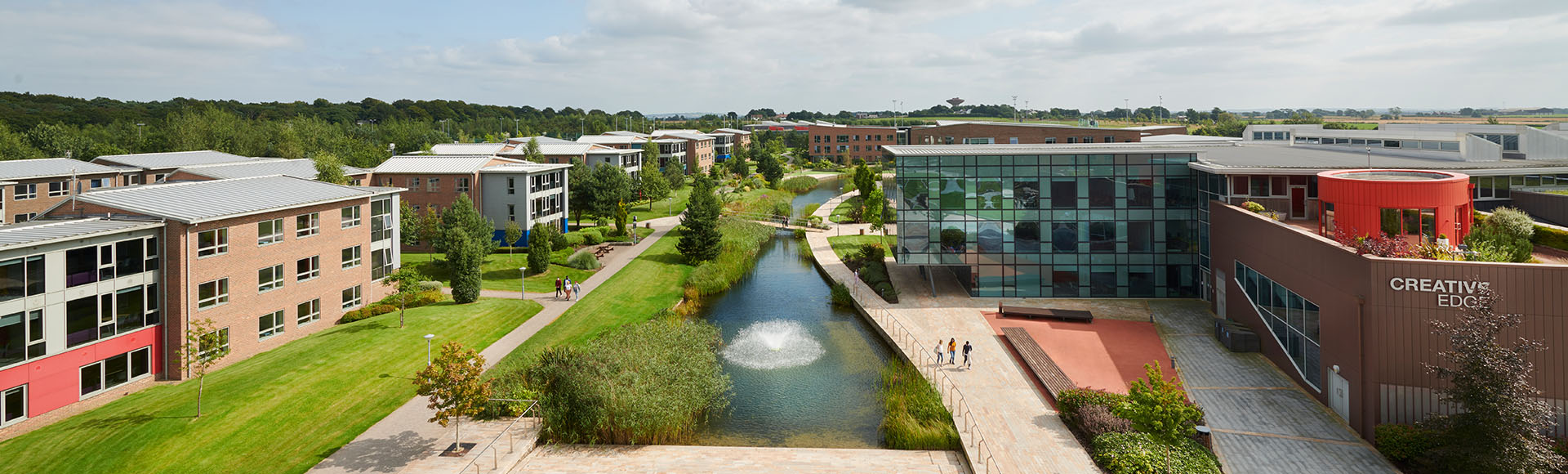
Since 1885, we’ve been inspiring minds and changing futures. Today, we’re a UK Top 35 University – one of the highest climbers in this year’s Guardian...


 Wed 03 Jun 2026