Postgraduate Studentships - Search for funding opportunities.



Postgraduate Studentships - Search for funding opportunities.
 Study Details: Full time 1 year, Part time 2 years
World leading academics from across Lancaster's Faculty of Humanities, Arts and Social Sciences share the latest developments in this dynamic field.
What are the key causes of environmental change? What is stopping nations from collectively shaping a more sustainable relationship between people and the environment? Our innovative master’s course offers fresh thinking on how to address some of the biggest challenges of our times, equipping you to play a transformative role in finding viable solutions.
Our master’s in Global Sustainability and Environmental Futures analyses the relationship between people and the environment. Using critical concepts, theories and practices drawn from across the arts, humanities, and social and natural sciences, you’ll learn tools that will enable you to unpick the complexity of human and non-human interests in environmental futures.
You’ll engage with educational, scientific, legal and regulatory approaches to dealing with global issues such as violences, sites of trauma and conflict, inequalities, poverty and environmental injustice. You'll explore the past, present and future of environmental change, including topics such as global environmental politics, and environmental crisis and societal change.
Through a variety of modules, you’ll be encouraged to draw on different disciplines and consider issues from the perspectives of diverse stakeholders and seek context-specific solutions.
The School of Global Affairs offers three master’s degrees that share a common ethos and course structure. Each provides distinctive yet interconnected opportunities to develop the skills, knowledge, relationships and partnerships needed to meet the global challenges of our time.
You’ll take part in subject-specific modules designed to build in-depth knowledge of global sustainability and environmental challenges and assess, engage in and create responses to real world issues.
In studio modules you’ll work on live community briefs, connecting Lancaster’s research with both local environments and global issues.
On leadership modules, you’ll join with students from other master’s cohorts on projects and use generative, collaborative thinking to create innovative solutions that are relevant to diverse external stakeholders.
Working with students from our other cohorts will bring you into contact with those specialising in AI and global health and medical humanities. You’ll experience the benefits that harnessing skills and knowledge from diverse groups and subjects can bring.
You’ll have the opportunity to tailor your final project to draw on your academic, personal or professional experience. A range of innovative assessment types will give you the freedom to represent your chosen topic creatively and persuasively.
With its dedicated leadership module, this course prepares you for a future as a collaborative change-maker. The course challenges traditional views of leadership. It adopts an understanding of inclusive leadership that is grounded in critical, creative and collaborative skills.
By taking this interdisciplinary approach and engaging in the discourses of leadership ethics, you will be equipped to bring about positive change in your chosen field.
You will benefit from Lancaster’s rich, collaborative academic environment, being able to participate actively in research events and opportunities provided by the Faculty of Humanities, Arts and Social Sciences.
Study alongside work and other commitments by taking this course on a part-time basis. Running over two years, you take a selection of modules each year.
We will liaise with you over your choice of optional modules and your schedule, so that you can successfully balance your work and other commitments alongside the master’s programme.
2:2 Hons degree (UK or equivalent) in any subject.
This course will appeal to those wishing to move into a challenging but rewarding career where you can make a difference to the world we live in. You may already be engaged in a professional role and looking to advance or change your career path.
The programme integrates flexibility in terms of options for part time students and is designed to maximise opportunities for students with professional experience to share and develop their existing insights and expertise.
We welcome students from a broad range of academic backgrounds including the arts, humanities, social sciences, natural sciences and management subjects. This master’s provides the opportunity to extend your prior educational and work experience in new directions.
You may be interested in roles with:
Core
Applied Learning Studio 1: Situated Responses
Applied Learning Studio 2: Connected Worlds
Global Leadership
Global Leadership Independent Project
Navigating Sustainability and Global Environmental Futures
Optional
Environmental Crises and Societal Change
Global Environmental Histories
Intercultural Business Communication
Language Studies for Postgraduate Students
Methods in Environment and Culture
Sustainable Development and the Global South
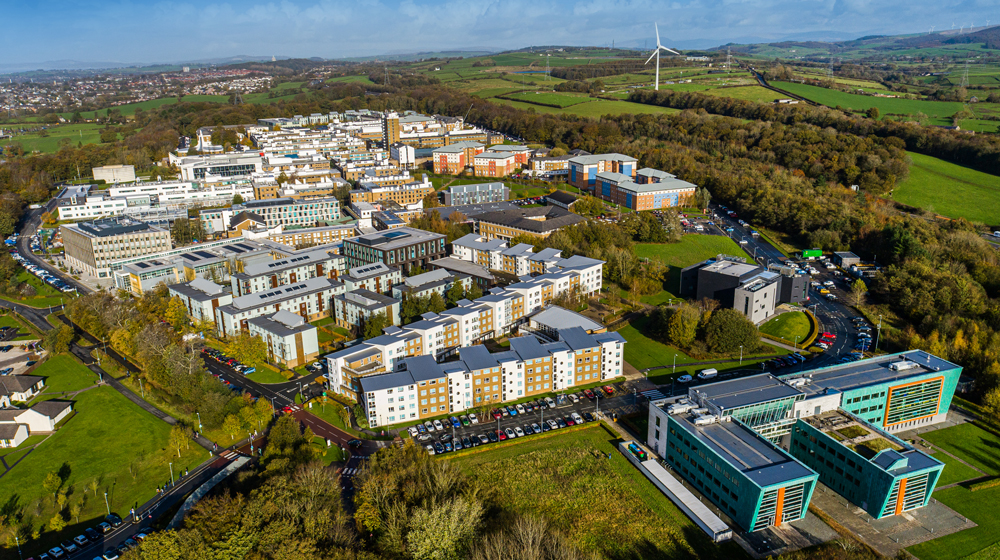
Global reputation and research excellence Lancaster is a top 10 UK university (Complete University Guide 2026) set on a 578‑acre parkland campus in n...


 Sat 27 Jun 2026