Postgraduate Studentships - Search for funding opportunities.




Postgraduate Studentships - Search for funding opportunities.



 Study Details: 1 year full-time; 2 years part-time
Find out about courses, learn about the application process, and discover how we can help you achieve your professional goals.
The world is changing, you can either allow change to happen to you or you can be a key part of the change. The Applied Innovation Design course will prepare you to take a leading/active role in enabling a change in whatever field you choose, through the experiential application of current theory and commercial practices.
There are many definitions of the word ‘innovation’ and whether you chose to define it as a leap or a hop, innovation is a novel way of realising value. This could be through a new product or service, organisational change, new processes, facilitating creative practice or establishing and leading on strategic direction. The world needs people who are able to approach an ever changing landscape of social, business and sustainability needs, armed with design thinking processes and collaborative approaches, to create real value.
Design thinking skills are eminently transferrable and can be used to help understand and approach a diverse variety of human centred challenges, and have the potential to create significant change. This course will introduce you to the skills and knowledge needed to steer, row and rock the boat in relation to applied innovation activities.
The academics involved with this programme have extensive links with design and manufacture companies locally and globally, which are utilised to ensure that modules are relevant for the modern roles in innovation design, and used as a basis for professional development through work placements, and to promote an innovative and commercially focused mindset.
[0:03] So on this course we can actually work with companies, industries...That Bangor University is offering a course which actually allowed me to work with an actual industrial problem [0:12] I did my Bachelor's degree in Mechanical Engineering at an University in India so I'm currently doing my second MSc in in Applied Innovation Design. [0:20] I would say I've developed myself a lot after coming to this course. I've developed my CAD skills, the design software skills, my finite analysis and also the thinking process. [0:33] This course actually taught me how to think how to approach a problem and the lecturers! Other universities if you want to go and meet lecturers or professors you have to send them an email you have to ask for permission. [0:46] Here you just have to you just have to come in and then you can meet them whenever you want and then like they'll talk to you like more than one hour explaining very clearly what you need to do what you should not do I've never found it in any any of the previous degree I've done yeah it's completely different. [1:04] In the last 6 months I took two projects in two different industries - the first project is with a company called International Safety Components. They are based in Bangor so they are a safety equipment manufacturing company. [1:16] The project that that I'm currently doing is with a company called Key Optic. Key Optic is is a military based company but now they want to expand into commercial market so the the first product they want to launch is a thermal image camera so I am currently designing a concept design for the for them and we actually want to design a product for firefighters. [1:36] So now we are designing a thermal image camera for firefighters. So how this goes actually helped me in in securing a job... As I said earlier, at the group stage we have to work with other people we, have to work with strangers, to come up with a solution for the problem like in this course, in this Applied Innovation Design course, we actually have some of the tasks like that, so that's that really helped me in the group stage and in the interview stage. [2:06] And the presentation stage they almost focused on the strategy of the company so I've done the strategy course - it actually helped me to prepare for that presentation and the interview. [Music]
Ideally applicants should have a first or a high second class honours degree in a related subject such as Design, Psychology or Business, or equivalent qualifications / experience. Applicants should also have a background or proven interest in design, or design related activity.
For International applicants IELTS: 6.5.
For fees and funding options, please visit website to find out more
The Masters in Applied Innovation Design is intended to enhance your career prospects and opportunities, whilst offering the flexibility to adapt the course to your own area or industry of interest, through the selection of projects and assignment focus. Students may choose to study either full or part-time, which may include studying alongside employment in a related role.
Graduates from the course will be able lead on design innovation and change, in commercial contexts; pursue roles as design practitioners, as well as launch entrepreneurial ventures.
The course is designed to challenge students to engage with design at all levels, from understanding its wider role and value in organisations, to applying this understanding alongside creativity and innovation tools in the roles of leader, facilitator and practitioner.
The course consists of two semesters of study, which includes design based projects; academic study; and the option to undertake a research focused industrial placement, leading to a final, stand-alone research project. The final research project can follow three paths, with a focus on commercial delivery, entrepreneurship or commercial consultancy, based on an individual’s career aspirations and area of interest.
Content modules are split between essential core modules, which provide an in-depth understanding of tools and techniques used to apply innovative design thinking, whilst optional modules offer opportunities to pursue specialist areas of interest in more depth and include introductions to key design industry standard software such as Solidworks, Adobe Indesign, Photoshop and Illustrator, as well as influential design related subjects: Consumer Psychology and Behaviour Change. We strive to provide you with an excellent teaching and learning environment through a diverse range of assessment methods and the use of experiential teaching tools, technology, media and environments.
Core Modules
Optional Modules may include:
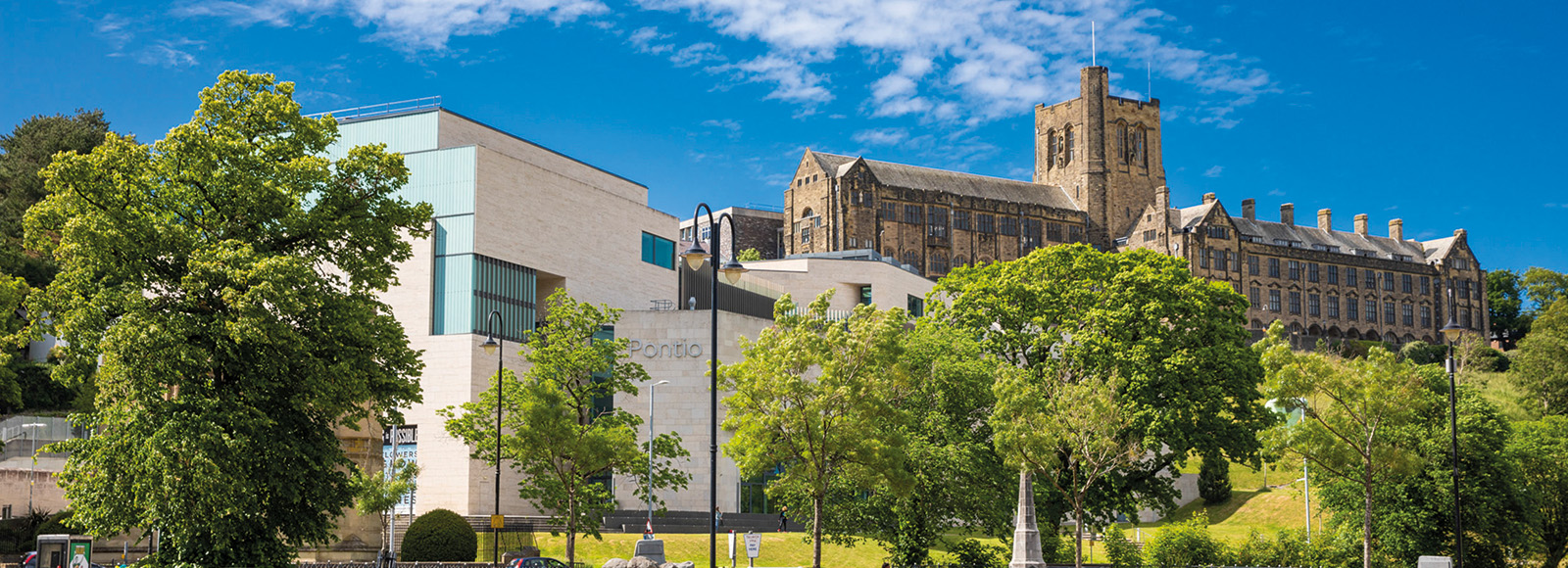
Your Future in Action. Nestled between the mountains and the sea in North Wales, Bangor University offers a postgraduate experience shape...


