Postgraduate Studentships - Search for funding opportunities.



Postgraduate Studentships - Search for funding opportunities.

 Study Details: 1 year
Find out about courses, learn about the application process, and discover how we can help you achieve your professional goals.
This MSc Environmental and Business Management at Bangor University is aimed at students with a strong interest in integrating environmental sustainability with business management practices. It is approved by the Institute of Sustainability and Environmental Professionals (ISEP).Sustainability is a principal goal and a key policy feature of many of the major institutes and governments of the world. A key element of achieving this is the balance of Environmental, Economic and Social development drivers. This course will take an integrated view of sustainability and environmental management within a business context and provide the specialist training that is required to fully integrate it into businesses and organisations and drive forward change and innovation.We are truly interdisciplinary, combining modules from The School of Environmental and Natural Sciences and Bangor's Albert Gubay Business School. Completing the MSc Environmental and Business Management will help you develop tools and knowledge to design and implement effective, evidence-based and innovative solutions to the challenges of our time. You will explore dynamic solutions to tackling climate change, sustainable waste management and biodiversity loss and learn how businesses can be a force for good in making a difference in ways that also drive efficiency and manage risk.This unique combination of subjects is combined with a strong focus on practical application and Bangor University has many of its own fantastic facilities such as Treborth Botanic Garden and an excellent research farm, Henfaes. These are put to good use for workshops and practical sessions, as well as many fascinating field trips to businesses and organisations large and small in the surrounding area.We enjoy close links with local, national and international organisations and have a lively programme of guest speakers from NGOs and industry in our lectures such as Natural Resources Wales, Environmental Consultancy companies and community energy social enterprises. We work closely with the ISEP regional group where students can make lasting connections with environmental and sustainability professionals as well as gaining employment opportunities and insights into their chosen professions.These skills are needed more than ever and graduates have found rewarding roles in sustainability and the environment in a diverse range of organisations including local government, academia, NGOs and multi-nationals. Our established partnership with ISEP ensures that graduates entering the sustainability profession are ready for the workplace with the expertise and understanding that they need to secure a job and drive change.We welcome applications from part time students many of whom join us from the public and private sector, adding to the rich mix of students on the course.As with all teaching in the University this programme aligns with the universal calls to action stated in the United Nations Sustainability Development Goals (UN SDGs). The specific SDGs relevant to the content of this programme will be highlighted, where appropriate, to students and the University's bilingual UN SDG badges will be incorporated in teaching materials.This course entitles students to free ISEP student membership for the duration of the course and on successful completion, graduates will qualify for GradISEP. Graduate membership is a launchpad for future leaders within environment and sustainability and offers a range of benefits to supports students throughout their careers. Students can then fast track to Practitioner Membership following successful completion of the work-bases assessment of competence.
Entry to the course normally requires at least a 2(ii) degree in a relevant subject, e.g. Environmental Science or Business Studies from a university, or a similar qualification from any other institution. Alternatively, possession of a suitable professional qualification and relevant practical experience may also be accepted. In general, however, applicants are judged on their individual merits and age, work experience and other factors are also considered.
English language requirements: IELTS 6.0 (with no element below 5.5).
For fees and funding options, please visit website to find out more
Graduates from this course have gained employment in private and public sector organisations, NGOs and academic institutions both in the EU and overseas, as well as becoming self-employed consultants in Environmental and Business Management.
The course has 2 parts. Part 1 runs from October to May and consists of seven taught components which must be completed successfully before proceeding to part 2. Part 2 is the research element of the course, where you complete your dissertation from June to September. You will use your knowledge and skills developed in part 1 to develop your own research ideas and examine your chosen topic in detail.
Part one subjects:
Strategic Environmental Management (DXX-4524): This is a highly applied module upskilling you in a systematic response to sustainability. It will explore the many aspects of how businesses and organisations impact on the environment and how to address these challenges positively and pragmatically. Some or all of the following monitoring tools will be covered - Initial Environmental Reviews, Environmental Management Systems, Energy Audits, Lifecycle Assessments and Environmental Impact Assessment.
Data Management and Analysis (ENS-4403): This module takes students from the basic principles of designing research questions and gathering samples of data through to advanced skills in managing, visualising and interrogating data using statistical tests. The course is taught using Microsoft Excel, the free statistical programming language R, and the RStudio integrated development environment. These are used for data science in multiple sectors and industries, enabling flexible and repeatable data handling, visualisation and statistical testing workflows.
Organisations and People (ASB-4431): To provide an integrated analysis of management, organisations and people, developing the conceptual, strategic and practical skills necessary for managers in complex, global organisational contexts, drawing on key issues arising from contemporary research in organisational behaviour (OB) and human resource management (HRM). Insight from this module helps to support some of the complex challenges of the socio-cultural aspects of the organisation including (but not limited to) individual motivation, group behaviour and cultural change.
Strategic Management (ASB-4413): This module introduces the language of strategic management and explores the link between strategic and operational management. You will develop a critical understanding of the strategic processes that lie at the core of business management processes and how to place strategic decision making within a dynamic business environment.
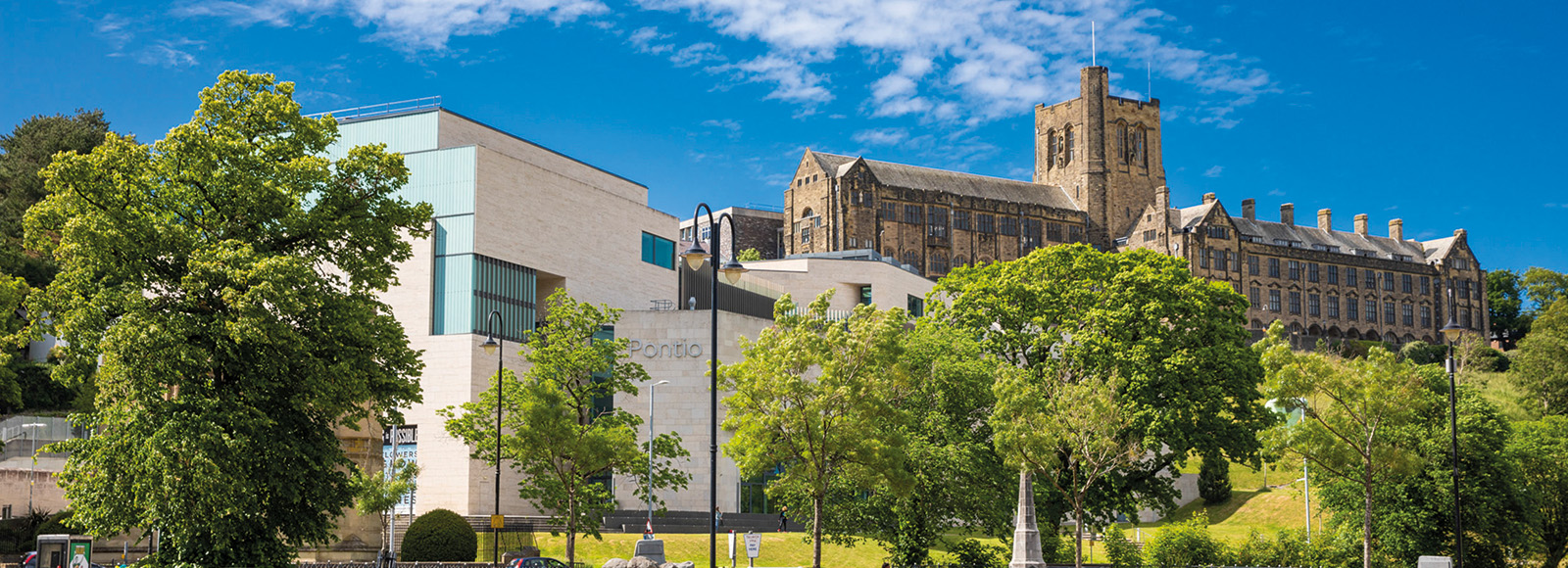
Your Future in Action. Nestled between the mountains and the sea in North Wales, Bangor University offers a postgraduate experience shape...