Postgraduate Studentships - Search for funding opportunities.




Postgraduate Studentships - Search for funding opportunities.


 Study Details: 1 year
Our MSc Astrophysics course explores the formation and evolution of stars, galaxies and the Universe itself.
Our one-year Astrophysics MSc is designed to equip you with the experience required for a successful career. You’ll develop the advanced knowledge and experience needed to pursue a career in research, either at a top university or a research facility. You’ll also master the problem-solving and analysis skills that employers value in a variety of sectors, spanning computing, data science and engineering.
Whether you want to advance your understanding of the topics you found most interesting during your undergraduate studies or gain the skills needed to achieve your goals, you’ll be able to focus on the topics that are most important to you through a range of optional modules. You’ll have the opportunity to advance your understanding of topics such as particle physics, dark matter, quantum mechanics and astrobiology.
One of the biggest parts of your degree is a year-long research project. You’ll investigate an important issue or problem in astrophysics of your choice, under the supervision of an active researcher who is an expert in your chosen area. You’ll review research literature, design and conduct research using qualitative and quantitative research techniques, and handle and analyse data. You’ll also gain experience communicating your findings verbally and in writing.
Examples of recent research projects include:
Minimum 2:1 undergraduate honours degree in Physics or any degree where Physics is a named component, with relevant modules.
Employers hire our graduates because of their ability to plan projects, analyse data and solve complex problems, independently and as part of a team. Our courses are designed to give you the skills that will help you succeed in a range of careers, spanning areas such as:
A physics degree from Sheffield can take you far, whatever you want to do, whether that’s in roles like software engineering or research and development. Our graduates have been hired by a variety of employers, such as BAE Systems, BT, EDF energy, HSBC, IBM, Nissan, the NHS and the Civil Service.
You’ll cover advanced topics and gain extensive research training, which is also great preparation if you’d like to pursue a career in research. Sheffield graduates have secured PhDs at many of the world's top 100 universities and have gone on to work at major international research facilities, such as CERN and ESA.
Some of our students also choose to complete teacher training in order to inspire the next generation of physicists.
Core modules:
Star Formation and Evolution
Galaxy Formation and Evolution
Introduction to Cosmology
Physics Research Skills
Research project
Optional modules:
A student will take 45 credits (three modules) from this group.
The Development of Particle Physics
Dark Matter and the Universe
Advanced Quantum Mechanics
An Introduction to General Relativity
Physics in an Enterprise Culture
Astrobiology
Origin of the Chemical Elements
Observational Astronomy with field trip
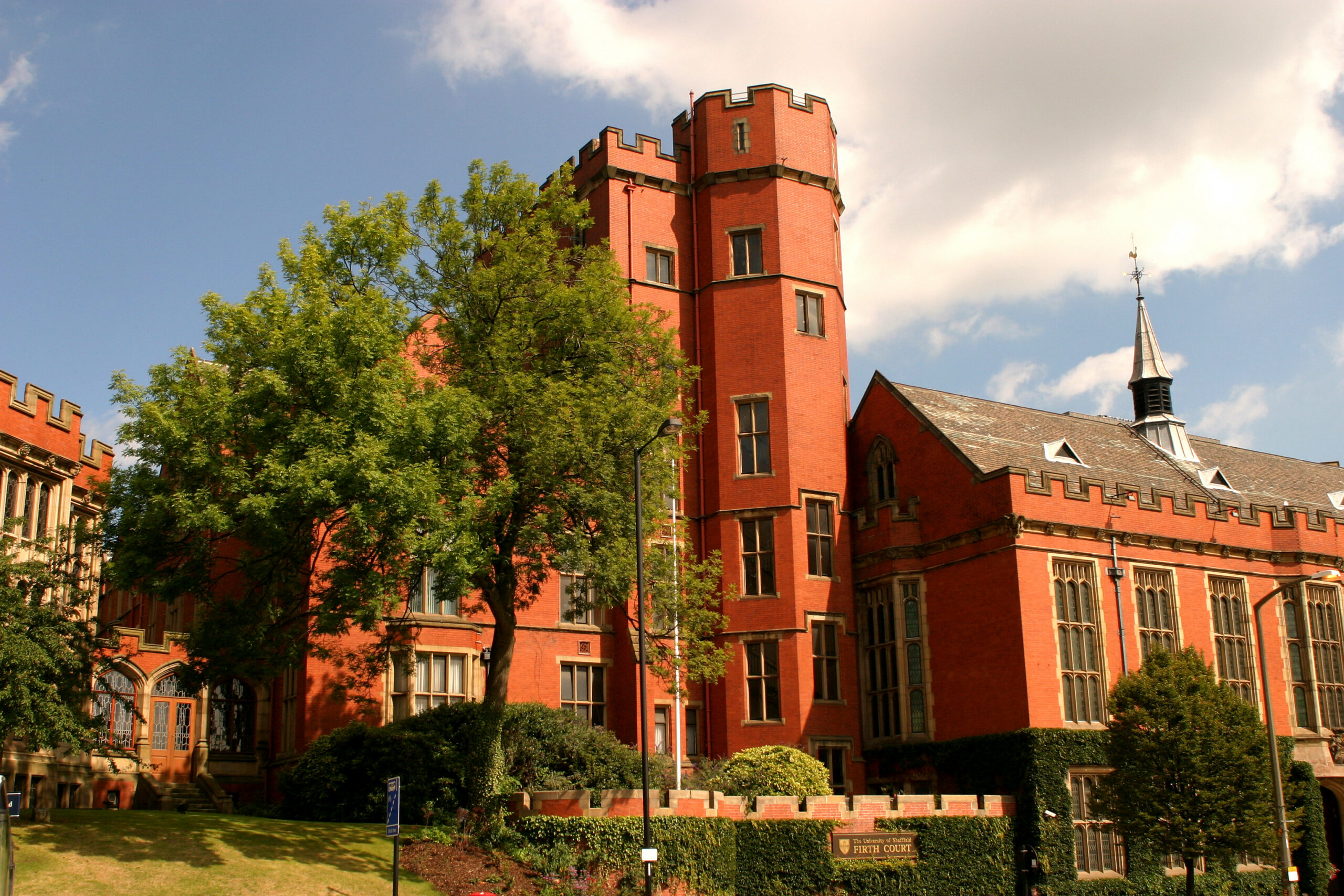
A QS world top-100 university Studying at the University of Sheffield means you’ll get the future that follows a degree from a Russell Group Universit...