Postgraduate Studentships - Search for funding opportunities.



Postgraduate Studentships - Search for funding opportunities.
 Study Details: 12 months or 24 months
Through a series of lectures, seminars and practical workshops, you will learn how biomolecular evidence is preserved and later extracted and analysed by bioarchaeologists, and how this data is used to further enhance the information available to archaeologists, evolutionary biologists and palaeoecologists.
This programme also draws on the Department’s expertise in human osteology to provide you with the knowledge and skills required to identify and interpret human remains from archaeological deposits. In addition, you will learn how the study of ancient genes and genomes through the use of techniques such as next-generation sequencing and population genetics is transforming our understanding of the human past, human evolution and the bio-history of other species.
You will also learn the theoretical knowledge and practical skills needed in order to identify and interpret palaeopathological changes observed in archaeological human remains and to understand what these changes can tell us about ancient diseases. Students will have the opportunity to develop an original bioarchaeological science research project with our osteoarchaeological, aDNA and isotope specialists in our dedicated laboratories.
2:2 UK Honours degree, or an Honours degree from a non-UK institution which is judged by the University to be of equivalent worth in Archaeology, Anthropology, Earth Sciences, Genetics, History, or Zoology or a related discipline.
Bioarchaeology is a rapidly developing field of study. Graduates of this programme will be well placed to pursue careers working as professional archaeologists, either for archaeology companies or for universities, museums, local authorities or other heritage sector organisations. The knowledge and skills taught on this programmes are highly transferable and have multiple applications beyond archaeology, for example in medical sciences.
Career Opportunities
Archaeological Researcher
Conservation Scientist
Field Archaeologist
Laboratory Technician
Project Archaeologist
Research Assistant
Core Modules:
Ancient Biomolecules (AY5011)
Getting Started at the University of Aberdeen (PD5006)
Palaeogenetics (AY5507)
Dissertation in Archaeological Science (AY5906)
Optional Modules:
Theory and Method in Research (AY5002)
Human Osteology (AY5008)
Advanced Archaeological Approaches (AY5504)
Ancient Health and Disease (AY5506)
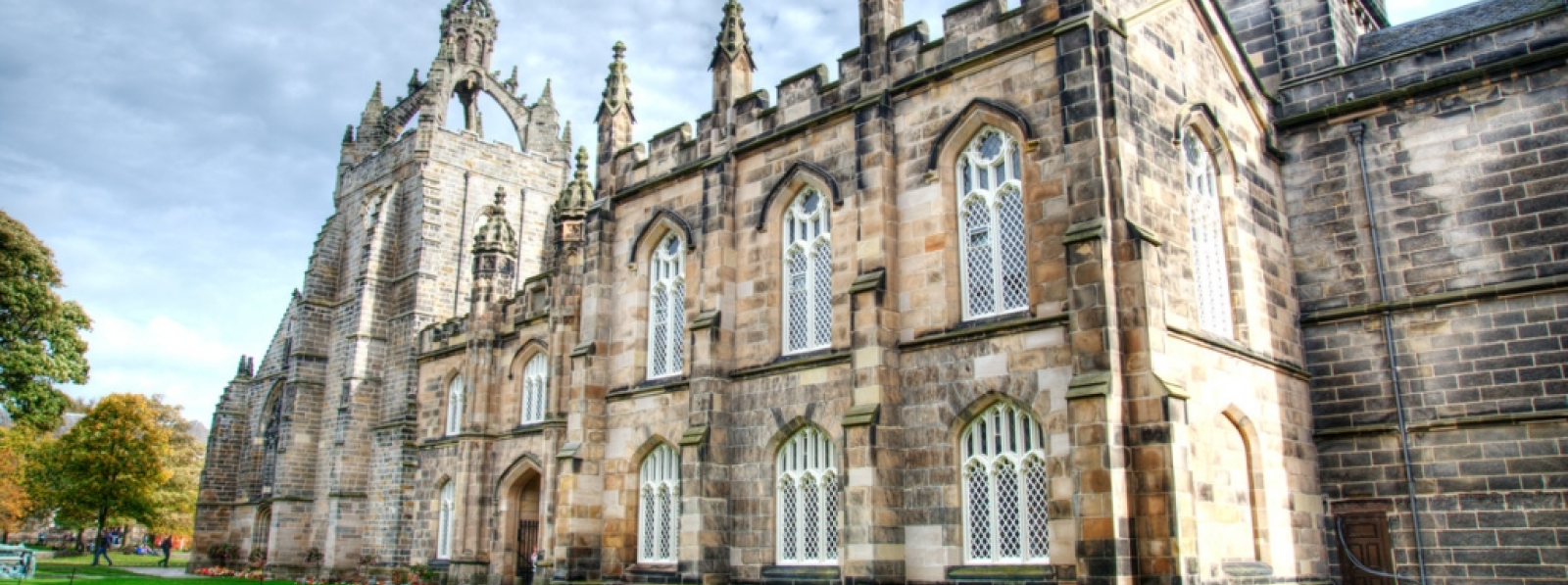
Founded in 1495 by Bishop Elphinstone, the University of Aberdeen boasts 500 years of excellence, and has secured a position as a leading internationa...


