Postgraduate Studentships - Search for funding opportunities.



Postgraduate Studentships - Search for funding opportunities.


 Study Details: 1-2 Years
Our MSc in Counselling and Psychotherapy incorporates incorporates four interwoven strands of counselling training: counselling theory, counselling practice, personal development, and positionality.
The philosophy of the programme is humanistic, with a focus on person-centred practice. The core theoretical model is grounded in Carl Rogers’ belief in the self-therapeutic capacity and wisdom of clients (1967). The philosophical traditions of existentialism and phenomenology illuminate our understanding of humanistic practice, explored through lectures and small group work.
You will be encouraged to examine and question your own beliefs, assumptions, and lived experiences to develop a personal, integrated theory of human development. This process is rooted in humanistic and phenomenological principles and supports a deepening awareness of how identity, power, and privilege shape therapeutic presence and practice.
Positionality is a major strand of the programme, threaded throughout all aspects of training. You will be invited to reflect on your social location, including dimensions such as race, gender, class, sexuality, ability, and culture, and consider how these intersect with power and privilege in therapeutic relationships. This includes engaging with difference, marginalisation, and the ethical implications of working across diverse contexts. We view this reflective work as essential to developing relational depth, cultural humility, and ethical integrity.
To enable you to build and maintain strong therapeutic alliances, we aim to facilitate your ability to co-create relationships at depth, including an understanding of the barriers that may prevent or impact such relationships. Concepts such as presence, empathic understanding, resonance, acceptance, and challenge will underpin your personal way of being and professional practice, supporting your capacity to meet clients with authenticity and depth.
2:2 degree in any subject
or
Keele Graduate Certificate in Counselling, with 60% in one assignment and a Progression Report from an academic mentor
You will also need: an English language qualification
Keele counselling students go on to work in a wide range of counselling and mental health fields in the UK and internationally as well as progressing on to further study, research or specialist training.
PSY-40197 – Peer Practice and Reflective Learning Part 1 (15 credits)
PSY-40199 – Peer Practice and Reflective Learning Part 2 (15 credits)
PSY-40201 – Supervised Counselling Placement (Full-time, 0 credits)
PSY-40205 – Supervised Counselling Placement (Part-time, 0 credits)
PSY-40059 Exploration in Counselling (15 credits)
PSY-40023 – Understanding in Counselling (30 credits)
PSY-40061 – Integration in Counselling (15 credits)
PSY-40026 – Research Methods (15 credits)
PSY-40054 Personal and Professional Development and Reflexivity (15 credits)
PSY-40027 – Counselling Dissertation (60 credits)
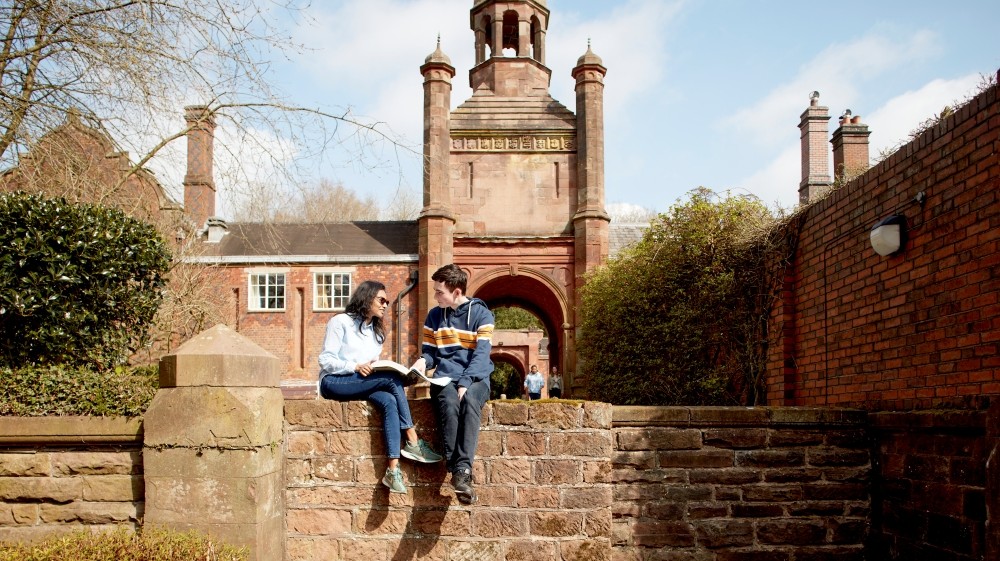
At Keele, we’re proud to offer a diverse range of career-focused courses and a thriving student life on our beautiful 600-acre campus, with everything...