Postgraduate Studentships - Search for funding opportunities.



Postgraduate Studentships - Search for funding opportunities.



 Study Details: 1 year - 2 years
Bridge the gap between built environment planning and ecological science. With this valuable master's, you’ll devise new design approaches for cities, towns and infrastructure to help reduce emissions, improve the health of living systems and increase resilience for the climate emergency.
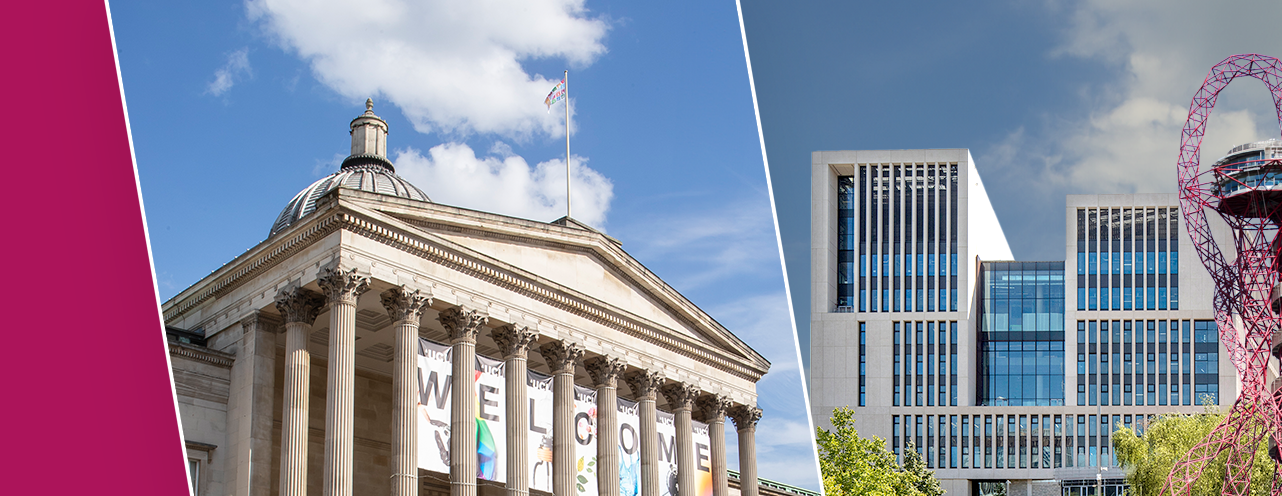
Throughout the programme, you’ll get the chance to put your theoretical learning and project work to the test across UCL’s purpose-built facilities, including the People and Nature Lab at UCL East and the Bartlett Faculty of the Built Environment’s Centre for Advanced Spatial Analysis (CASA).
On a course that’s led by award-winning ecologists and conservation scientists, you’ll work alongside planners, architects, industry professionals and local authorities and communities to deliver real urban projects.
A minimum of an upper second-class UK Bachelor's degree in life sciences, environmental science, civil engineering, urban design or architecture subject area, or an overseas qualification of an equivalent standard. Applicants with an appropriate professional qualification and relevant work experience (e.g. engineering design, green infrastructure, local government) will be considered.
For fees and funding options, please visit website to find out more
This programme is designed to equip you with the specialist skills and ecological knowledge urgently needed to implement sustainable approaches to spatial planning.
Your expertise in data science and data analysis will also be of critical importance for measuring and monitoring the success of sustainability measures and urban biodiversity initiatives.
Compulsory modules
Optional modules
Masters study opportunities at UCL Make your Master’s matter For a real-world advantage, study at a world-class university and your Master’s wi...


 Wed 08 Jul 2026