Postgraduate Studentships - Search for funding opportunities.




Postgraduate Studentships - Search for funding opportunities.



 Study Details: 1 year
Find out about courses, learn about the application process, and discover how we can help you achieve your professional goals.
This degree programme provides the opportunity to follow the prestigious CFA (Chartered Financial Analyst) specialist pathway and acquire the skills to complete the CFA Level 1 examination (for both September-intake and January-intake students).
The course offers students a sound knowledge of the theoretical foundations that underpin modern investment and risk management techniques, and prepares them for entry into the fast-growing investment management industry. The programme aims to cover the traditional syllabus of a Masters degree in finance whilst providing students with advanced level management and business training in specialised areas of investment, such as the management of equity and bond portfolios; trading techniques; risk management; management of foreign exchange and derivative securities and emerging markets investment. Students will benefit from a unique opportunity to use various online databases available in the Albert Gubay Business School, such as DataStream and SNL.
Students will acquire advanced, specialised knowledge and skills across a range of investment applications at strategic and operational levels. They will develop intellectual skills and research expertise in the area of investment analysis and portfolio management; technical skills relevant to financial markets’ operation and management; critical skills in examining advanced level theories and empirical evidence; computational skills in financial service activity; and analytic skills in exploring the efficient markets hypothesis.
1 year full-time. This programme offers both January and September start. A 10 month version also available (September start). Students on the 10 month course will study 5 modules in the Autumn and 5 in the Spring.
Many of our degree programmes provide the opportunity to follow the CFA (Chartered Financial Analyst) specialist pathway and acquire the skills to complete the CFA Level 1 examination (for both September-intake and January-intake students). The CFA has become the most respected and recognised professional qualification in finance in the world.
Students undertaking this pathway will take a module titled Financial Research & CFA Series during the summer period. Students will attend research seminars in June to be followed by specialist training for the Level 1 CFA exam. The teaching will include two days of Research Seminars in June and five two-day blocks of training, plus an additional two-block of revision provided across July and August. Assessments will follow the seminars and the CFA training.
Candidates should have a good first degree or 2(ii) or higher or equivalent from a university or another approved degree-awarding body. Non-graduate qualifications deemed to be of a satisfactory standard for the purpose of postgraduate admission may also be considered. Work experience is desirable.
If your native language is not English, you must provide satisfactory evidence that you have an adequate knowledge and understanding of written and spoken English:
Graduates of the MSc in Investment Management are expected to obtain employment in a variety of careers in investment institutions, and will be ideally positioned to become investment specialists or managers and consultants in other corporate bodies. Some students would progress into further postgraduate research study.
The course is a full-time programme lasting 12 months. It consists of two parts:
Part 1:
Is a wholly taught component, contributing 120 credits. All taught modules carry a credit weighting of 15 credits. Part 1 is taught during the two semesters which make up the academic year. Teaching during semester 1 normally runs from late-September to December, with examinations in January. Teaching during Semester 2 normally runs from late-January to early-May, with examinations in May and June.
Part 2:
This consists of either a supervised Dissertation of around 10,000 words, or a structured Advanced Taught Programme of Summer Study that is specific to your chosen degree. Part 2 is completed during the summer months, from late-May to September. If you undertake a supervised Dissertation, you are expected to submit your Dissertation by September in the calendar year following your initial registration for your postgraduate degree. The assessments for the Advanced Taught Programme of Summer Study are also completed during September in the calendar year following your initial registration.
Compulsory modules:
Plus choose 1 of the following:
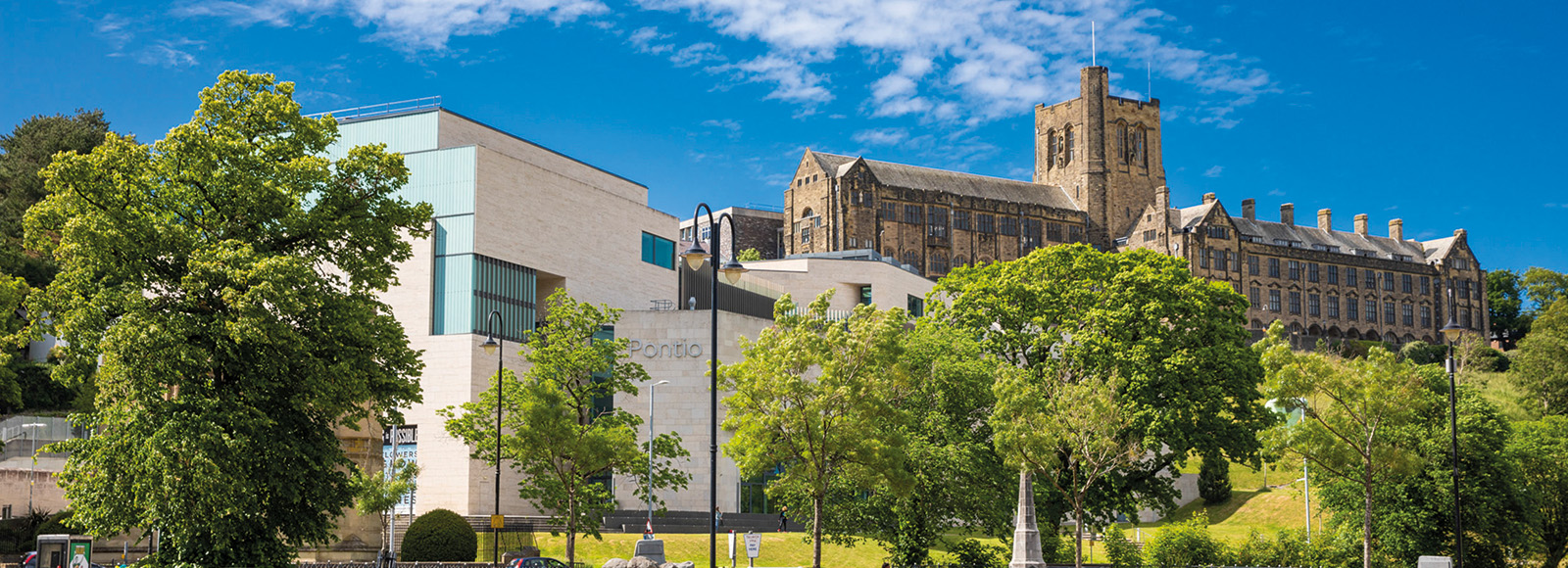
Your Future in Action. Nestled between the mountains and the sea in North Wales, Bangor University offers a postgraduate experience shape...


