Postgraduate Studentships - Search for funding opportunities.




Postgraduate Studentships - Search for funding opportunities.



 Study Details: 1- 3 years
Find out about courses, learn about the application process, and discover how we can help you achieve your professional goals.
Bangor University’s Masters in Linguistics provides postgraduate-level training for students who wish to develop a deeper understanding of the empirical, theoretical, and conceptual aspects of Linguistics.
This course is designed for home and international students with a strong interest in linguistics. Two possible paths are offered: one for students who have a BA in Linguistics and want to pursue more advanced studies in the discipline, and one for students with an undergraduate degree in any other subject wishing to achieve a qualification in linguistics.
We are an accessible, friendly Department whose staff are passionate about passing on their expertise and subject knowledge as well as committed to delivering the highest quality learning experience. Our research informs our teaching provision at all levels, meaning you'll learn about topics we're researching right now. Students benefit from enthusiastic staff at the cutting-edge of academic enquiry. Our staff are committed to providing an excellent student experience with strong personalised support throughout the duration of your MA in Linguistics.
Following taught components, students on this degree will complete an independent research-based Masters level dissertation. The staff in our Department provide excellent personalised supervision and academic support for dissertations on a wide range of topics in Linguistics using applied, theoretical, experimental, corpus-based or ethnographic frameworks. These include, but are not limited to:
Students on our Linguistics MA can use state-of-the-art learning facilities which include:
Our staff also have expertise in and provide support for the following:
At Bangor you will be part of a vibrant, innovative research community which is supported through various events throughout the year, ranging from individual talks to informal seminars and workshops to large conferences. Many of these are open not just to academic staff, but also to students and to the general public.
My name is Elham Taheri, and I have studied applied linguistics for Tefal teaching English as a foreign language.
First of all, I enjoyed being taught by very professional teachers.
Of course, I have studied English language before, but this time it was more professional and I loved that.
And the course, because it has both theoretical parts and practical part is really helped me.
A 2.ii undergraduate degree or equivalent in a relevant subject (e.g. Linguistics, Modern Languages, Translation, Psychology, English Language/Literature, English Education/English Language education).
Applicants with equivalent qualifications or experience and applications from working professionals with non-graduate qualifications will be considered on an individual basis. Please contact us for more information.
For students whose first language is not English an IELTS score of at least 6.0 (with no element below 5.5) is required.
For fees and funding options, please visit website to find out more
An MA in Linguistics will give you a detailed understanding of how language works and the ability to conduct research at various levels of linguistic analysis. Graduates find career opportunities in communications, teaching, publishing, research. The transferable skills acquired through this programme are beneficial in a range of other careers, including advertising, journalism, consulting etc. After successful completion of the MA in Linguistics, you may also decide to pursue an academic career in Linguistics, by applying for a place on the PhD in Linguistics.
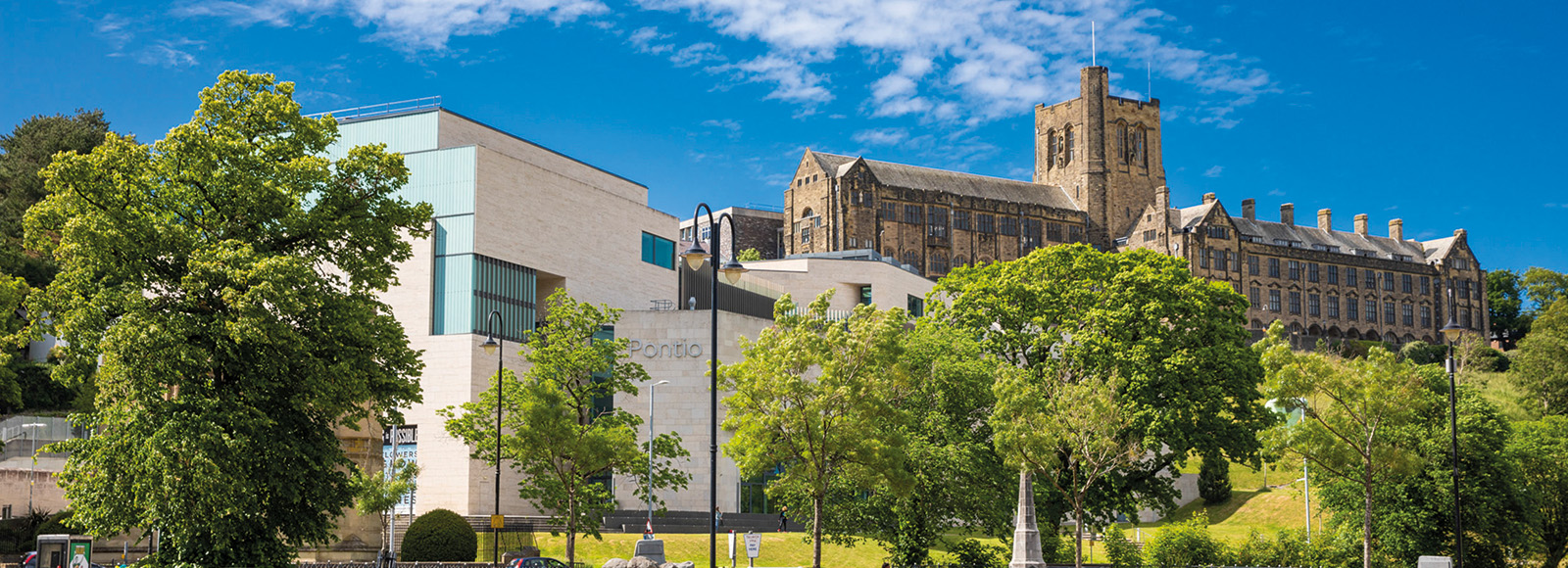
Your Future in Action. Nestled between the mountains and the sea in North Wales, Bangor University offers a postgraduate experience shape...