Postgraduate Studentships - Search for funding opportunities.


Postgraduate Studentships - Search for funding opportunities.
 Study Details: 8-20 weeks full-time
If you have applied to study on the PGCE Secondary Mathematics with QTS (11-16) at Edge Hill University and require enhancement of your subject knowledge, then this course could be for you.
The aim of the course is to develop your subject knowledge in mathematics to prepare you to teach the conceptual and applied aspects of the subject effectively, with competence, enthusiasm and confidence, to learners aged 11-16 years. Trainees will be encouraged to prepare for teaching A Level topics where appropriate.
Different programmes are available and the most suitable structure for you will depend on the mathematical content of your degree. The course structure and length will be flexible to reflect the needs of each individual trainee.
You may apply for the course if you have been offered a place on the PGCE Secondary Mathematics with QTS (11-16) at Edge Hill University. A Level Mathematics (or equivalent) is also required.
Completion of this subject knowledge enhancement course may form part of your offer conditions for a place on the PGCE Secondary Mathematics with QTS (11-16). Please note, however, that completion of this subject knowledge enhancement course does not necessarily qualify you for a place on the PGCE unless this is made clear at the time the offer is made. This will be discussed with you if you are called for an interview.
If you have a degree in a mathematically related area or a degree which contains a small amount of mathematical study alongside other subjects, then this course will be suitable for you prior to a Secondary Mathematics PGCE. It is designed for applicants without a breadth and depth of mathematical study in their degree who may need to improve their subject knowledge as a condition of entry to the PGCE. The actual length of the course depends on your qualifications and experience and will be discussed as part of the interview process.
The course is designed to address subject knowledge gaps in/around:
Number: structure and calculation; fractions, decimals and percentages; measures and accuracy.
Algebra: notation, vocabulary and manipulation; graphs; solving equations and inequalities; sequences.
Ratio, proportion and rates of change
Geometry and Measures: properties and constructions; mensuration and calculation; vectors.
Probability.
Statistics.
Develop an understanding of the connections that exist between topics in mathematics.
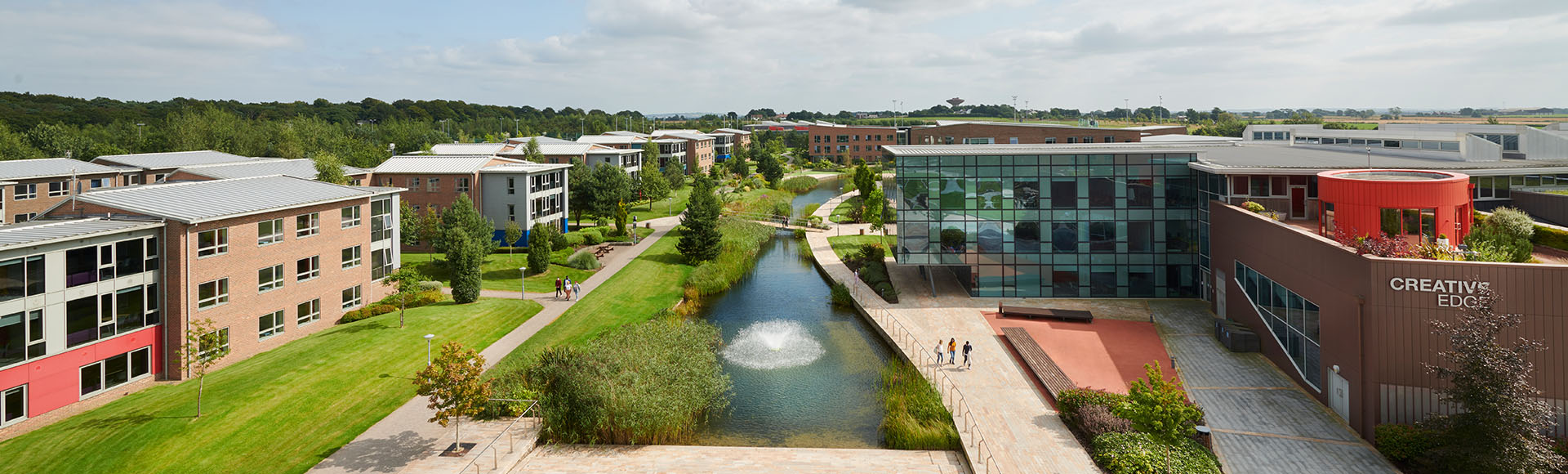
Since 1885, we’ve been inspiring minds and changing futures. Today, we’re a UK Top 35 University – one of the highest climbers in this year’s Guardian...


 Tue 21 Apr 2026