Postgraduate Studentships - Search for funding opportunities.




Postgraduate Studentships - Search for funding opportunities.

 Study Details: 8 weeks full-time
Young people are growing up in a world where digital literacy is vital in all aspects of their lives. Starting to learn these skills at school is essential to set them up for success, whatever they decide to do in the future.
With a new focus on the subject in schools and a resurgent interest in computer technology like the Raspberry Pi and Codebug, there’s no better time to train as a teacher of computing. You’ll learn to teach all aspects of computing, from computer science and digital literacy to information technology. And you’ll get to use the latest specialist software and tools.
How do you create a lesson plan to inspire and motivate your pupils? What are the current challenges in secondary education? How do you pass on your computer science expertise – and continue to grow that knowledge throughout your career? You’ll explore a range of questions to help you become the best teacher you can be.
To join this PGCE, you will be expected to have:
Please note, for the purposes of initial teacher training, level 2 literacy and numeracy qualifications are not considered as equivalent to GCSE Grade C or Grade 4 in English Language or English Literature and Mathematics.
An interview forms part of the selection process, which can be conducted online or face to face.
If you accept a formal offer from Edge Hill University you will be required to meet the Department for Education’s standards for physical and mental fitness to teach and clearance to work with children. Further information, including a Declaration of Health questionnaire and details of how to apply for a Disclosure and Barring Service (DBS) Enhanced Disclosure will be sent to you after you have firmly accepted an offer.
This PGCE is accredited by the Department for Education. Successful completion of the programme will enable you to gain recommendation for Qualified Teacher Status (QTS).
You’ll be ready to progress into employment as an early career teacher of computer science at secondary school level. Our proactive careers service can help you to find job vacancies. They also offer in-depth advice on teacher job applications and interviews.
Your academic and professional experience will also mean you could progress onto MA or MRes study. After that, you might even decide to work towards your PhD.
Compulsory modules:
Evidence-Informed Practice (Secondary Computing)
ITE Curriculum and Practice (Secondary)
Principles of Learning and Curriculum Design (Secondary Computing)
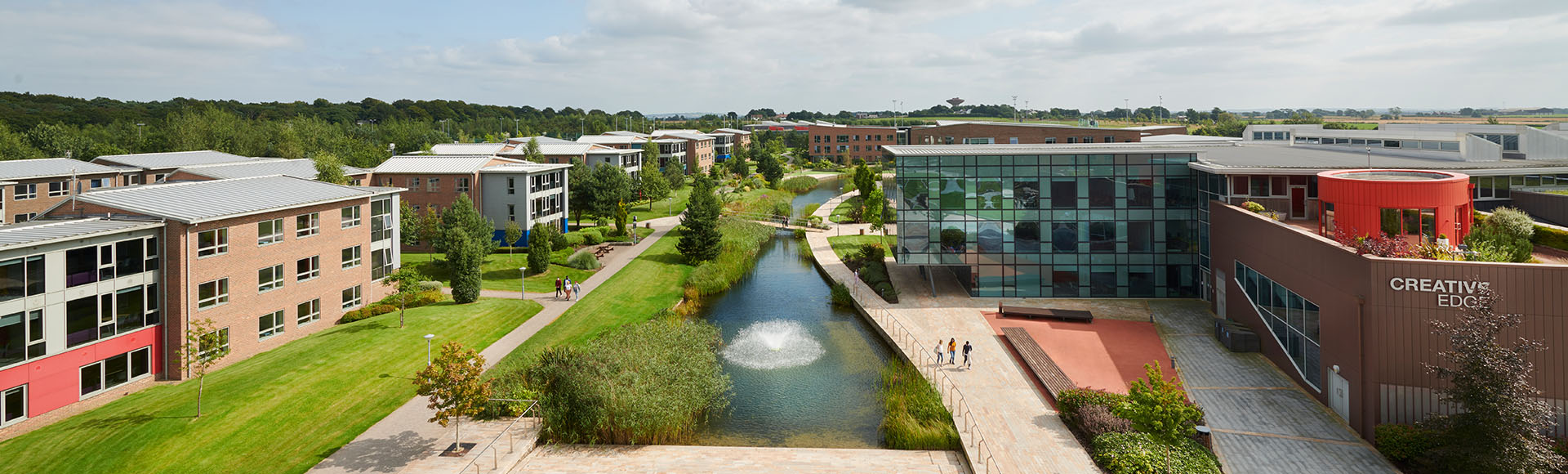
Since 1885, we’ve been inspiring minds and changing futures. Today, we’re a UK Top 35 University – one of the highest climbers in this year’s Guardian...


 Tue 21 Apr 2026