Postgraduate Studentships - Search for funding opportunities.



Postgraduate Studentships - Search for funding opportunities.


 Study Details: 1 year full time, 2-3 years part time
This degree is intended for students with a general interest in sociology who wish to update, extend and deepen their knowledge and understand current developments in the field.
The programme aims to provide students with opportunities to expand their knowledge of the discipline by engaging with contemporary research and by undertaking historical and comparative study.
MA in Sociology; Postgraduate Diploma in Sociology; Postgraduate Certificate in Advanced Social Sciences
A first degree at 2.ii standard or higher (or equivalent) in Sociology or a related subject is required. Related subjects may include, but are not limited to, Social Policy, Sociolinguistics, Political Science, Social Anthropology. Applications from candidates with professional qualifications and/or appropriate experience will also be considered on an individual basis.
International students whose first language is not English: An IELTS score of 6.0 (no element below 5.5).
Graduates will find employment in a range of sectors valuing critical theoretical, analytical and methods skills. Further studies form another avenue, including PhD and subsequent jobs in teaching and research. An MA in Sociology can lead to working in politics and the media, or for business and social enterprises.
Compulsory modules:
Research Process and Meaning: The module provides postgraduate level training in the main varieties of qualitative and mixed methods research in the social sciences, including basic literacy in qualitative data analysis. Locating the research process in debates about situated knowledge, reflexivity and subjectivity, show how research design is unavoidably grounded in assumptions about the nature of the phenomena to be investigated and how researchers are implicated in the things they describe.
Students are taught how to generate qualitative data and how to apply a variety of analysis techniques. The use of ‘mixed’ methods is addressed through examples of text analysis, visual interpretation and online social research. Training in the use of NVivo qualitative data analysis software is an integral part of the module and takes place alongside the sessions dealing with analysing conversation, interviews, observations, ethnographic accounts, texts and visuals.
MA Dissertation
The dissertation is undertaken on completion of the taught modules. It is valued at 60 credits (one-third of the MA degree) and will be around 20,000 words in length.
Part-time students in employment may choose a topic related to their profession and an area in which they wish to develop further expertise and specialisation. Under guidance of a dissertation tutor, students will undertake their MA dissertation work independently on a topic of their choice. This may be a piece of empirical research including primary or secondary data analysis or a theoretical dissertation.
Optional modules:
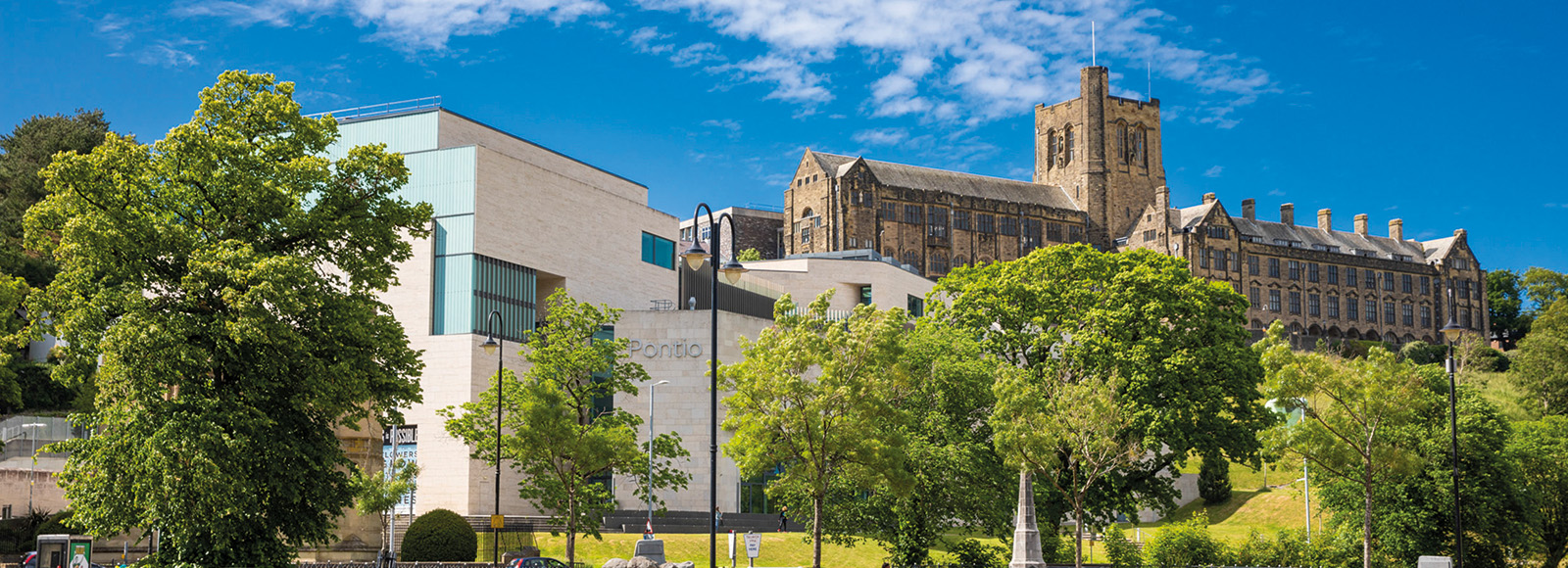
Your Future in Action. Nestled between the mountains and the sea in North Wales, Bangor University offers a postgraduate experience shape...


