Postgraduate Studentships - Search for funding opportunities.




Postgraduate Studentships - Search for funding opportunities.



 Study Details: Full time 1 year
Taught by internationally recognised experts in the field, we believe that the best statistics start with a real-world challenge and end with a real-world solution. With a perfect blend of mathematical theory and practical application, you will develop an advanced understanding of statistical inference, gaining the modelling skills needed to solve scientific, industrial and social challenges. We provide many opportunities for you to gain practical experience in data analysis, coding algorithms, machine learning approaches and more.
If you’re looking to progress into higher-paid roles in the statistics or data analysis fields, a Master’s degree will equip you with the skills to access a wider job market.
As researchers, we actively collaborate with external partners, ensuring that our research is relevant and useful. As your lecturers, we bring these experiences to the classroom to give you insights that cannot be obtained from a textbook. We understand that to navigate from the start to the finish of any real-world challenge requires mathematical theory, building algorithms, optimisation, computing, modelling, data analysis and communication. Whilst many programmes focus on either theory or application, we train you in a distinctive blend of both. We believe that this puts you in the best position to secure employment. We also develop your:
There are three phases to your learning. You will begin by developing and strengthening your core knowledge and skills in classical and modern statistical methods and inference. Topics covered include frequentist and Bayesian inference, data analysis, generalised linear models, statistical computing and communication.
In phase two you will choose three specialist optional modules from two themes:
Statistical foundations of AI – these modules provide training in the modern statistical algorithms, models and computing which sit at the interface of data science, AI and statistics.
Medical statistics – these modules equip you with the essential training required by the medical and pharmaceutical industries, although they have uses in other areas including social and environmental statistics.
Discover your theme's optional modules.
In phase three you will complete your dissertation. Working under the guidance of an experienced statistical researcher, you will complete an extended project that is tailored to your interests. You might progress your understanding of a topic covered in a taught module, investigate a methodological topic not covered by one of the taught modules, or undertake an extended data analysis.
2:2 Hons degree (UK or equivalent) in Mathematics or Statistics.
We may also consider non-standard applications where you have studied a degree in other quantitative subjects that include courses in probability, statistics, linear algebra, and calculus.
You should clearly be able to demonstrate how your skills have prepared you for relevant discussions and assessments during postgraduate study.
For fees and funding options, please visit our website to find out more.
As a graduate of our MSc Statistics, you will be highly employable thanks to your in-depth specialist knowledge and wealth of technical and transferable skills. In our data-driven society, you will have a range of career options in finance, banking and insurance, government, pharmaceutical and health research, education, environmental science and industry. The starting salary for many graduate statistical roles is highly competitive, and popular career options include:
This master’s also serves as good preparation for further study at PhD level.
Core
Advanced Statistical Modelling
Computing and Algorithms for Statistics
Estimation and Inference
Statistics Dissertation
Optional
Clinical Trials
Deep Learning
Epidemiology and Disease Modelling
Hidden-Process Models
Machine Learning
Survival and Longitudinal Statistics
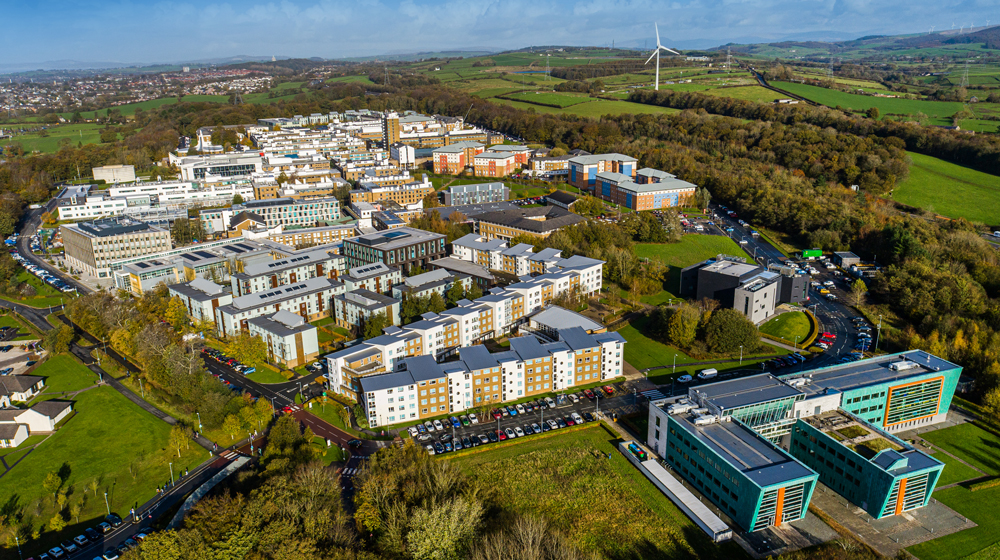
Global reputation and research excellence Lancaster is a top 10 UK university (Complete University Guide 2026) set on a 578‑acre parkland campus in n...