Postgraduate Studentships - Search for funding opportunities.



Postgraduate Studentships - Search for funding opportunities.

 Study Details: 1-2 years
Find out about courses, learn about the application process, and discover how we can help you achieve your professional goals.
The Celts MA gives you the opportunity and ability to sift fact and fiction, and to answer in detail the question: Who were – and who are – the Celts?
Few words are as evocative and intriguing as ‘Celtic’, bringing to mind the intricacies of Bronze Age jewellery, the massive structures of Stonehenge and Newgrange, the legends of Arthur and Cú Chulainn and the Bardic craft of medieval kings and princes. But ‘Celtic’ is also about the Renaissance, the Enlightenment and the New World; Romanticism, Revolution and the struggles for survival in modernity of languages, literatures and entire national identities.
Over a single academic year, modules will be taught by experts in the Schools of Welsh, History, and Music, focusing on literature, archaeology, religion, mythology, antiquarianism, art history and music, to explore the culture and identity of the Celtic peoples from the hillforts of prehistory to the devolved and independent parliaments of today.
Students on the course will also be guided as they perform their own research towards a Master’s thesis on a topic of their choice.
Major issues covered on the MA ‘Y Celtiaid – The Celts’ include:
An important objective is to provide you with relevant analytical training, so that you are familiar with the latest theoretical and practical developments relating to Celtic Studies. On completing this course, you will have a solid grounding in the main methods and sources of the discipline, and will also have developed widely-transferrable skills which will be of clear relevance to a broad range of careers.
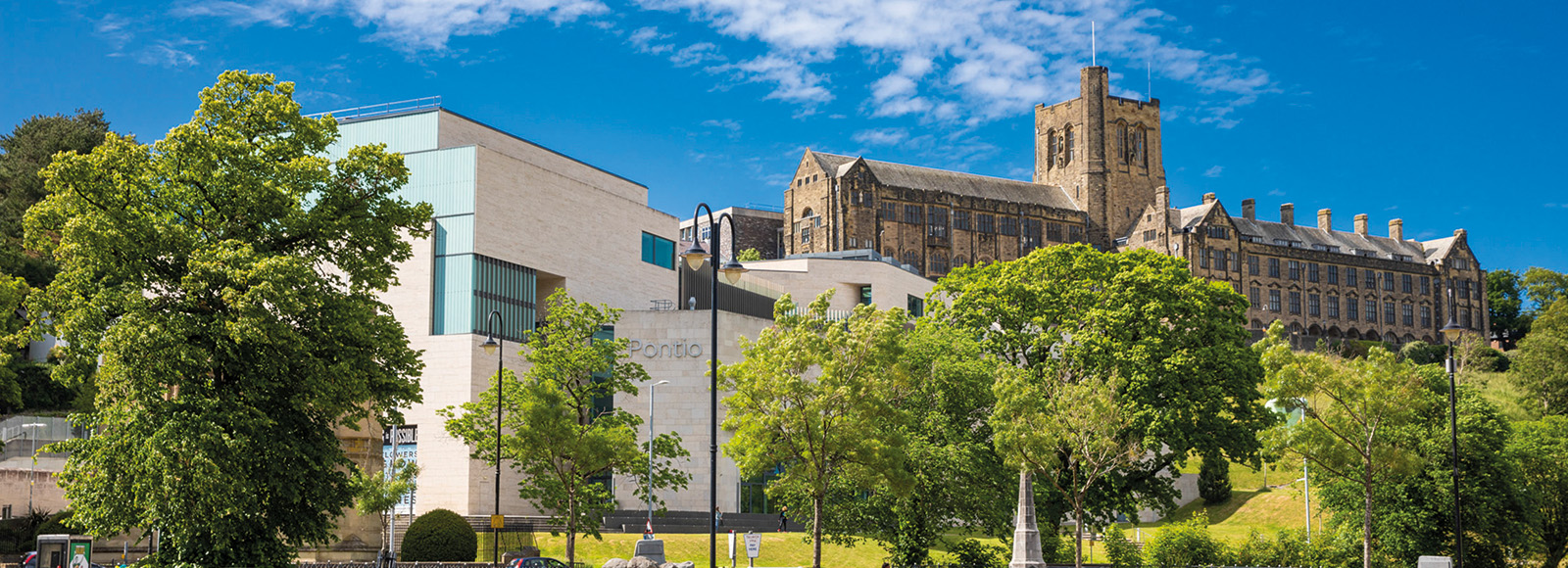
Bangor is beautifully situated in in the old kingdom of Gwynedd in north-west Wales, between the mountains of Eryri (Snowdonia) and the Irish Sea. Here, a majority of the population speak Welsh, the strongest surviving Celtic language. Welsh, with English, is the official language of this bilingual country.
To travel from nearby Caergybi (Holyhead) on the ancient Druidic centre of Ynys Môn (Anglesey), to Dublin or Dun Laoghaire in Ireland takes as little as two hours, and by road and rail Bangor is comprehensively linked to the rest of the Island of Britain.
Those wishing to explore further their own Celtic roots can take easy advantage of the comprehensive genealogical aids which are available both in the University Library and the nearby National Library of Wales in Aberystwyth.
Entry to the MA programme requires a 2(ii) undergraduate degree in a relevant subject, e.g. literature, history, folklore, mythology, comparative literature, archaeology, anthropology from a university, or a similar qualification from any other institution. Alternatively, possession of a suitable professional qualification and relevant practical experience may also be accepted. In general, however, applicants are judged on individual merits with work experience and other relevant factors are also considered
We welcome applications from good graduates in relevant disciplines and from those with equivalent professional qualification and work experience.
If your native language is not English or Welsh, you must provide satisfactory evidence that you have an adequate knowledge and understanding of written and spoken English or Welsh.
Welsh-language courses are available which would enable students who wish to study through the medium of Welsh to develop their skills. Please contact us for details.
ELCOS: Tel +44 (0)1248 382 252; e-mail: elcos@bangor.ac.uk;website: elcos.bangor.ac.uk
For fees and funding options, please visit website to find out more
You will acquire a wide range of transferrable skills, enabling you to proceed to a variety of career paths, including all those normally associated with graduates in the Humanities. Those who wish to pursue academic interests will gain a sound basis to enable progress to PhD level.
The The Celts MA is a one-year (full-time) course, and it may also be taken part-time (normally up to three years). The degree programme consists of two parts:
Part 1
This is a wholly taught component, contributing 120 credits. All taught modules carry a credit weighting of 40 credits. Part 1 is taught during the two semesters which make up the academic year. Teaching during semester 1 normally runs from late September to December. Teaching during Semester 2 normally runs from late January to early May.
Modules in Part 1 will be assessed by essay.
Part 2:
This consists of a supervised Dissertation of around 20,000 words, on a topic of your choice, decided upon in consultation with a thesis advisor. This is completed during the summer months, from late May to September, and full-time students should submit their Dissertation by September in the calendar year following initial registration.
Compulsory Modules:
The Celts: Fundamentals: This module introduces the main sources for information about the ‘Celts’, based on two different definitions of ‘Celtic’. These definitions are interrogated as the evidence is explored. This evidence is mainly: ( i) the use of the word itself (‘Celt’, ‘Keltoi’, etc.) in identification or self-identification; (ii) the prime sources concerning attitudes to the history and identity of the ‘Celts’ (defined here as those peoples who speak or spoke a Celtic language in the Modern period.
There are four main areas:
Your Future in Action. Nestled between the mountains and the sea in North Wales, Bangor University offers a postgraduate experience shape...


