Postgraduate Studentships - Search for funding opportunities.




Postgraduate Studentships - Search for funding opportunities.



 Study Details: Full time 1 year, Part time 2 years
Lancaster’s MSc in Biomedicine offers an intensive 12-month full-time or two-year part-time programme in a world-class environment.
You will be taught and supervised by research-active academics who are experts in the biological mechanisms underpinning human diseases and turning research discoveries into practical applications such as diagnostic tools and novel drug treatments.
Throughout the course, you will develop strong intellectual, practical and transferable skills, gaining a highly sought-after postgraduate qualification that opens doors across academia, industry and healthcare.
You will gain a deep understanding of the molecular and cellular processes involved in human diseases and how innovative methods can be developed to diagnose, prevent and treat acute, chronic, and infectious diseases.
Through dedicated training in experimental design, data analysis and critical evaluation of scientific literature, you will be equipped for a fulfilling career in academic research, healthcare, biotechnology, pharmaceuticals or related sectors such as science communication and education.
Based in Lancaster’s Department of Biomedical and Life Sciences, our MSc in Biomedicine is aligned with our research themes in:
We specialise in both basic and translational research, advancing fundamental scientific discoveries and turning them into real-world health improvements such as diagnostic tools and new therapies.
We welcome applications from graduates from a range of disciplines and backgrounds including:
You can choose from four taught modules that showcase the wide variety of biomedical research. You will also conduct a rigorous research project involving experimental design, data collection, and analysis. This combined approach will strengthen your practical skills, while fostering critical thinking and research independence.
You will have the option to study from a diverse array of cutting-edge topics in biomedicine that include neurological disorders, immunotherapy, neglected tropical diseases and cancer research. Each module focuses on how understanding fundamental molecular and cellular processes can be harnessed to advance human health.
You will also study a specialised module that equips you with the tools to critically evaluate the pathways from drug discovery to the clinic.
You may also choose modules delivered by Lancaster Medical School to develop your knowledge of how research is conducted in a healthcare and/or clinical setting and how healthcare research is communicated to bring about changes to policy and practice.
Your taught modules serve as a foundation for your independent research project, which typically aligns with one of our core research themes and will be supervised by an experienced research-active member of our academic staff.
Diverse project options are available, such as:
Whatever the topic, your dissertation offers a valuable opportunity to produce robust scientific arguments, formulate and test hypotheses and critically evaluate competing scientific theories.
In addition to developing your practical laboratory skills, your research project will further your autonomous problem-solving and decision-making skills and apply ethical principles within the context of biomedical research.
Throughout the programme, our academic staff will support, guide and challenge you to ensure that you graduate with the confidence, critical insight and expertise needed to thrive in your chosen career path.
2:1 Hons degree (UK or international equivalent) in an appropriate Biosciences subject such as Biology, Biomedical Sciences or Biochemistry. Eligible related subjects are also considered. If you have any queries regarding the suitability of your undergraduate degree please contact the admissions team.
Applicants with a 2:2 Hons degree (UK or equivalent) may also be considered, provided they can demonstrate a strong research background from previous education and/or relevant professional experience.
For fees and funding options, please visit our website to find out more.
Research and development and laboratory roles
Data and quality roles
Science communication and policy roles
Healthcare and clinical science roles
Education roles
Core
Biomedicine Research Project
Optional
Brain Disorders
Cancer - Bench to Bedside
Drug Development from Concept to Clinic
Emerging Therapeutics in Immunology
Life Cycle of Research
Neglected Tropical Diseases
Policy and Practice Knowledge Translation in Healthcare
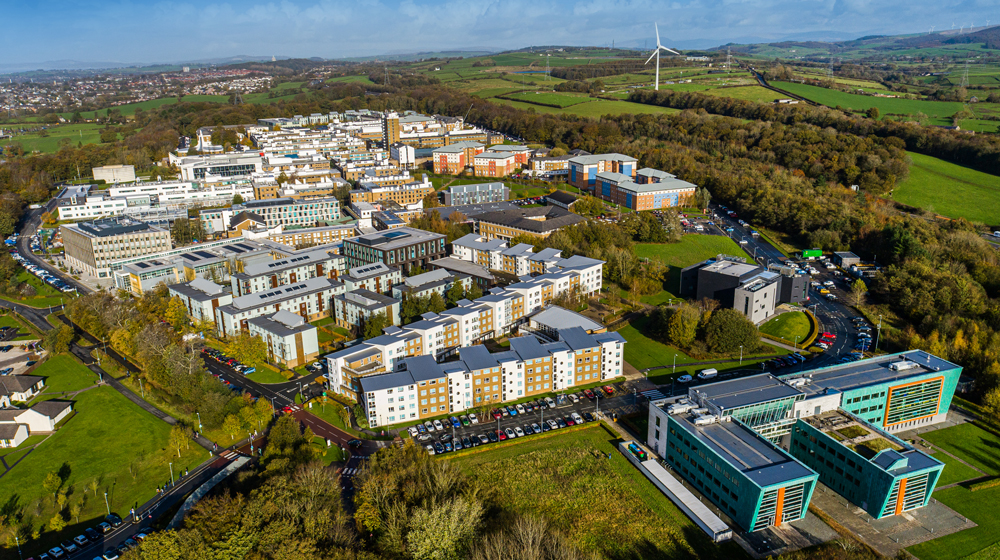
Global reputation and research excellence Lancaster is a top 10 UK university (Complete University Guide 2026) set on a 578‑acre parkland campus in n...


