Postgraduate Studentships - Search for funding opportunities.



Postgraduate Studentships - Search for funding opportunities.

 Study Details: Full time 1 year, Part time 2 years
The MSc Conservation and Biodiversity will develop you as an environmental science professional with the ability to analyse and address the ecological and conservation challenges facing our planet. Our programme is interdisciplinary – we believe that having the specialist skills to manage habitats and tackle wildlife-human conflict along with a broader understanding of global environmental issues will put you at the forefront of developing successful conservation actions.
The community you will belong to is based in Lancaster Environment Centre (LEC), home to a wide range of active, world-leading researchers making a positive impact in this field. This means that what you learn is truly cutting-edge. The MSc blends theory with practical skills so that you will gain a solid foundation in key theoretical issues, such as wildlife population dynamics and conservation biology, and develop essential field skills in species identification and sampling and monitoring of populations, alongside geospatial approaches. These skills are valued by employers in the sector.
Those who are passionate about nature and the diversity of life, who want to follow a career developing and implementing approaches for reverting biodiversity loss and promoting a positive human-nature future.You will take the skills gained into the fields of ecology, conservation and environment.
Throughout the programme, you will:
You will study three core and three optional modules, providing you with a good understanding of the key environmental challenges in the 21st century, their impact on society, and techniques used in seeking solutions. More specifically, you will gain knowledge of the key ecological principles underpinning the conservation of species and habitats and develop field and analytical skills to monitor populations and ecosystems.
Lancaster is well situated for outdoor learning. Surrounded by countryside, and with the Lake District World Heritage Site on our doorstep, you will work on case studies in some of the most interesting and natural areas in the country.
Finally, your dissertation provides the opportunity to develop a research project with an external partner or organisation. This could include consultancies, NGOs and government agencies. It’s an exciting way to apply your knowledge and skills to make a positive impact.
Study alongside work and other commitments by taking this course on a part-time basis. Running over two years, you take a selection of the modules each year.
We will liaise with you over your choice of optional modules and your schedule, so that you can successfully balance your work and other commitments alongside the Master’s programme.
2:2 Hons degree (UK or equivalent) in Ecology, Conservation, Biodiversity, Biology, Environmental Science, Geography, Biological Sciences, Earth Sciences, Water Management or Zoology.
We may also consider non-standard applicants with extensive work/volunteering experience or training in the ecology and conservation sector. Research experience via a dissertation on ecology or conservation may also be considered.
If you hold a 2:2 degree in a subject not noted above, please contact us for further information.
For fees and funding options, please visit our website to find out more.
Graduates of the MSc Conservation and Biodiversity move into roles in the environment sector, government, public agencies and charities. Many continue their academic training through a PhD, following a career in research.
Our alumni work as:
Core
Ecological Monitoring Techniques
Habitat Management
Local Environmental Challenges and Initiatives
Master's Dissertation
Optional
Agriculture, Climate Change and Food Security
Applied Data Science for Biodiversity
Aquatic Ecology
Conservation Science
Environmental Governance and Management
Environmental Impact Assessment
Geoinformatics
Soil Science
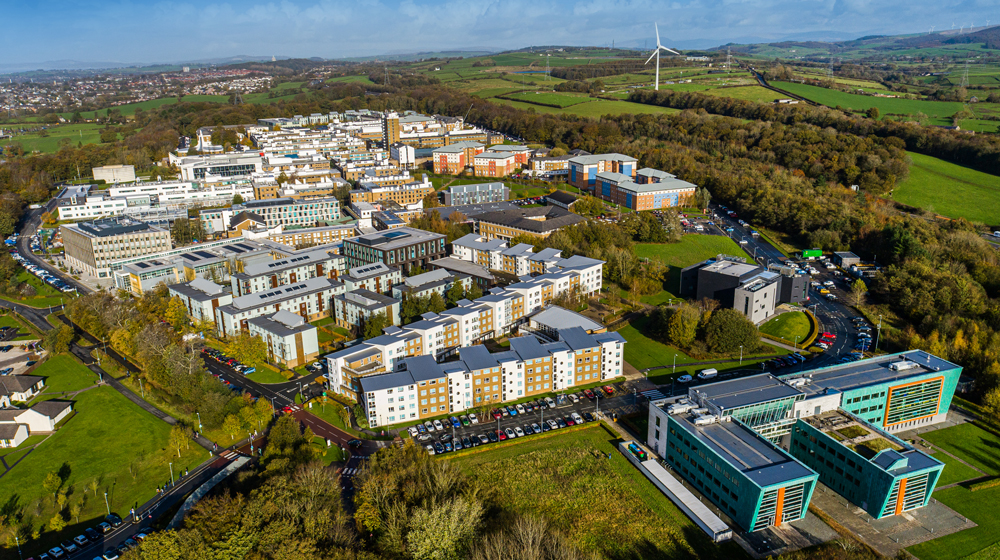
Global reputation and research excellence Lancaster is a top 10 UK university (Complete University Guide 2026) set on a 578‑acre parkland campus in n...