Postgraduate Studentships - Search for funding opportunities.



Postgraduate Studentships - Search for funding opportunities.

 Study Details: 1 year full-time, up to 2 years full-time with professional placement - multiple intakes,
If you aspire to develop innovative solutions for complex automation systems, this course could help advance your career in areas such as control systems, robotics or intelligent automation.
Tackle the principles behind the control systems driving industrial automation, ensuring efficiency and precision in complex processes.
Explore the design and operation of advanced robotic systems, including their applications in manufacturing, healthcare and autonomous systems.Develop skills in artificial intelligence (AI) techniques, enabling intelligent decision-making and automation in modern engineering challenges.
Gain proficiency in key programming languages and simulation tools used for modelling, testing and deploying automation solutions.
Apply your learned techniques to solve real-world challenges in a substantial research or industry-driven project.
Start dates:
Please use the official Coventry University website as your main source of information as our courses are subject to change throughout the year.
An honours degree 2:2 or above (or international equivalent) in a relevant discipline.
We recognise a breadth of qualifications, speak to one of our advisers today to find out how we can help you.
Successful completion of this course should provide you with skills applicable for industries including automotive, aerospace, process and chemical industries, manufacturing, robotics and automation, finance and banking. There may also be opportunities in research and development across a wide variety of these industrial and commercial sectors.
On successful completion of this course, you should be able to:
demonstrate knowledge and understanding of control engineering and the constituent components of a control system and analyse the behaviour using appropriate mathematical tools.
Assess the performance of a system via simulation and interpret the results quantitatively, such as numerically or statistically.
Evaluate and implement control algorithms and know their practical limitations
Demonstrate specialist knowledge in control engineering within the broad themes of the course depending on the chosen pathway.
Understand and conceptualise a given complex problem and produce an appropriate model to generalise at a higher level of abstraction.
Critically analyse, evaluate and apply advanced analytical skills.
Apply knowledge of design via simulation to select appropriate algorithms for achieving a specific task.
Critically evaluate and demonstrate awareness of a range of hardware and software platforms for control system design and implementation.
Research information relevant to programme topics from a variety of sources and to critically analysis ideas, arguments and points of view.
Control System Design - 30 credits
Robotics and Autonomous Systems - 30 credits
Digital Control Implementation - 30 credits
Data-driven Modelling - 30 credits
MasterS with professional placement
Individual Project - 60 credits
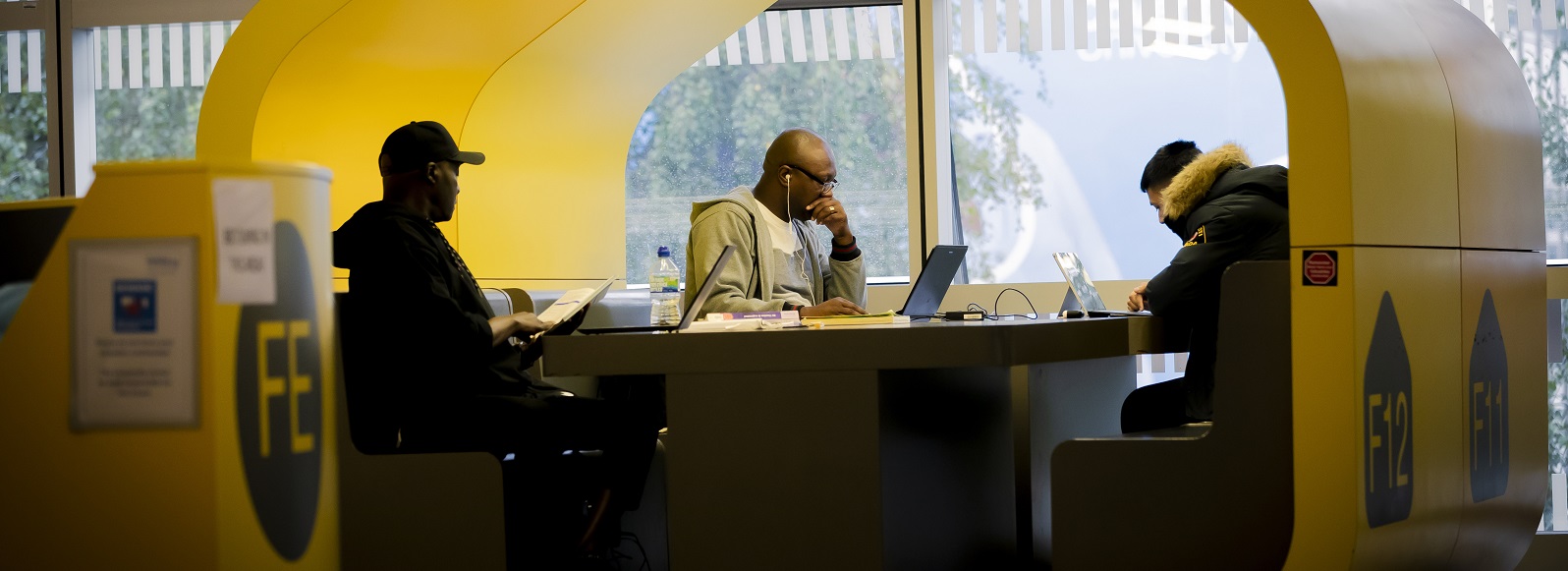
Masters and Taught Courses at Coventry University Introduction Coventry University is a provider of world-class teaching, learning and impactful rese...


 Sat 27 Jun 2026