Postgraduate Studentships - Search for funding opportunities.



Postgraduate Studentships - Search for funding opportunities.



 Study Details: Full time 1 year, Part time 2 years
Volcanoes are fascinating phenomena that are simultaneously spectacular and dangerous. They can both create and destroy our habitats and human-made infrastructure in addition to causing disruption and economic impacts. As over a billion people worldwide live close to an active volcano, effective hazard management underpins the lives and livelihoods of many.
Our MSc Volcanology will develop your expertise in, and understanding of, volcanic activity and its interaction with the wider environment. Taught by our world-leading environmental scientists, we very much believe that getting out into the field is essential to your studies, and Lancaster is perfectly placed to do this with the striking volcanic rocks of the Lake District on our doorstep.
Volcanoes can be analysed and studied in many ways, not just out in the field. You will also develop laboratory and computer-based skills to better analyse and evaluate environmental and volcanological phenomena.
Those looking to get a deeper understanding of volcanology to progress their career in the environment/geoscience sector, or as a step towards research with a PhD.
Through our volcanology group we share our passion for the research we do and invite students to take part in seminars, workshops and wider discussions to learn from their peers and research leaders. This extra-curricular activity broadens your perspective, enhances your research skills and can further your interest in specific areas.
We also develop your transferrable skills so that when you graduate you are well positioned for opportunities in industry or research. You will:
Volcanoes are the most recognisable sign of Earth's dynamic interior. Multifaceted interactions between magma, water and air generate a myriad of volcanic phenonena that can be unravelled through field, laboratory and numerical study. Volcanic deposits provide evidence of physical processes that pose hazards local and global.
Taught by world-leading experts in the field, you will start with a core module in physical volcanology where you learn widely applicable physical and chemical principles that underpin volcanic activity, including the rheology of magma, the behaviour of eruption-triggering volcanic gases and the transport of lava and ash to the surface and atmosphere. You have an additional core model that covers broader geological hazards, including volcanic, seismic and landslide hazards, and provides training in fieldwork and technical report writing. Your third core module provides an interdisciplinary overview of broader environmental challenges using a set of local case studies in and around the nearby English Lake District. This highlights context and is an important context communication experience. Then select three additional optional modules to suit your interests. One of these is the highly popular field course to Mount Etna on Sicily, to see an active volcano close up. Whatever your selection, each module is carefully designed to develop your broader learning and practical skills in that area.
Your Master’s culminates in a dissertation project under the supervision of one of our internationally recognised researchers, taking advantage of our well-equipped experimental and geochemical laboratories.
2:2 Hons degree (UK or equivalent) in Geology, Geography, Earth Science, Natural Science, Environmental Science or similar.
We may also consider non-standard applicants at a 2:2 degree level in a related subject, alongside relevant experience or training in volcanology, specific volcanology research, field work or broader contributions to environmental science.
Applicants with a 2:2 degree in Engineering, Maths/Statistics, English or Physics are encouraged to contact us for further information.
For fees and funding options, please visit our website to find out more.
Whether choosing to take up a role in industry or pursue a PhD, the MSc in Volcanology provides you with the knowledge base, skill set and additional professional competencies that together will distinguish you from other candidates. Our alumni hold positions as:
Core
Geological Hazards
Local Environmental Challenges and Initiatives
Master's Dissertation
Physical Volcanology
Optional
Contaminated Land and Remediation
Data Assimilation and Integration
Eco-innovation for Sustainable Development
Environmental Data Analysis and Programming
Environmental Governance and Management
Environmental Impact Assessment
Geoinformatics
Groundwater Resources and Protection
Managing the Energy Transition
Physical Volcanology Field Course
Understanding Climate Society
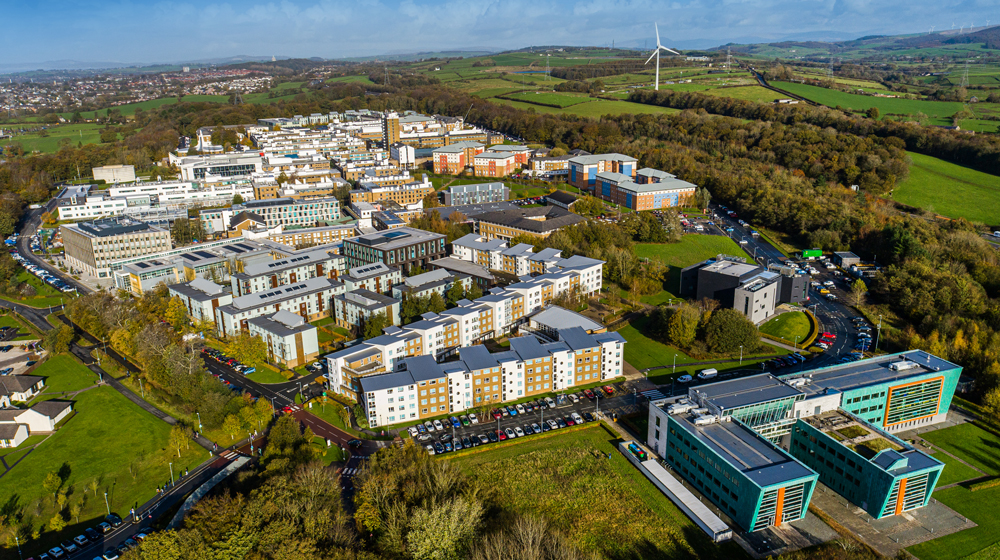
Global reputation and research excellence Lancaster is a top 10 UK university (Complete University Guide 2026) set on a 578‑acre parkland campus in n...


