Postgraduate Studentships - Search for funding opportunities.




Postgraduate Studentships - Search for funding opportunities.



 Study Details: Full time 1 year, Part time 2 years
Solutions to mitigate flood and pollution risk and better utilise water supplies for societal, economic and environmental gain requires world-leading hydrologists to design, implement, manage and evaluate. The MSc Flood and Water Management programme at Lancaster is specifically designed to enhance your skills and your potential to be a world-leading hydrologist.
You will have the opportunity to develop your graduate and/or professional skills in the use of field technology and state-of-the-art models using both industry-standard procedures and next generation approaches. You will develop new insights into contemporary water issues and optimal ways to resolve them.
Training is delivered by a combination of leading academics and industry practitioners from environmental protection company JBA Consulting meaning you receive direct input from professionals working in the field, giving you the skills that employers require.
We offer both full and part-time versions of this programme. Our flexible approach means you can start your training at any point. You may wish to enrol at the traditional academic start of the semester in Autumn or begin an any point in the academic year. This is particularly helpful for those taking the part-time option.
The in-person components are taught over intensive 2-3 contiguous-day activities to support those undertaking the programme part-time and provide a depth of focused learning for full-time participants.
You may be a graduate that has enjoyed hydrology aspects of your degree and would like to develop your hydrological skills to start a career with an organisation in the national or international water sector. Or you may be a practitioner working within environmental consultancies, government agencies and planning departments, water companies and water-focused charities who wishes to develop skills in flood and/or water management as part of your professional and career development.
Your qualification will show to others (employers, professional organisations, contractors, peers) that you:
Training is delivered in a friendly, interactive and professional atmosphere with hands-on practical experience throughout. This practical work involves both field exercises and use of the latest industry standard models – delivered by leaders in field hydrology and commercial modelling in the UK.
We offer two pathways with dedicated modules to tailor your training. Each pathway has a set of three core modules and a selection of optional modules, of which you will choose three:
Flood risk
This pathway provides core training focused on flood mitigation, covering topics such as sustainable urban drainage, floodplain restoration and flood forecasting.
Water management
This pathway provides core training focused on mitigating pollution of water resources, managing water supplies and advanced monitoring technologies.
Discover your pathway core and optional modules.
You will undertake a dissertation project with an exciting opportunity to engage with our research-active academics and our partners in the commercial, government and research water sectors. We offer many topics from our ongoing collaborations and research. Alternatively, we can support you to develop a project based on your employer’s needs.
We offer a suite of postgraduate level awards in Flood and Water Management:
The Certificate and Diploma programmes include a sub-set of modules from the Master’s programme, and each programme is offered independently of the others. This flexibility is valuable to those who are combining study with work or other responsibilities, or who are unsure about entering postgraduate level study.
On successful completion of the Certificate, you can progress to the Diploma or the Master’s, with exemption and a fee discount for modules already taken. Similarly, after the Diploma, you can sign up for the Master’s and take only the remaining modules.
2:2 Hons degree (UK or equivalent) in a science or engineering subject that includes hydrology modules; for example Civil or Environmental Engineering, Environmental Science, Geography or Natural Sciences.
We may also consider non-standard applicants at a 2:2 degree level in a related subject, alongside relevant experience and/or training courses (CPD) in hydrology or flood management.
For fees and funding options, please visit our website to find out more.
Graduating from the MSc Flood and Water Management programme awards you the competences for roles such as:
Core
Catchment Science and Management
Coastal flood and Erosion Management
Floodplain Management & Restoration
Master's Dissertation
River Hydraulics
Optional
Aquatic Ecology
Behaviour of Contaminants in the Environment
Catchment Hydrology
Contaminated Land and Remediation
Environmental Data Analysis and Programming
Environmental Governance and Management
Flood Forecasting
Geoinformatics
Groundwater Resources and Protection
Sustainable Urban Drainage
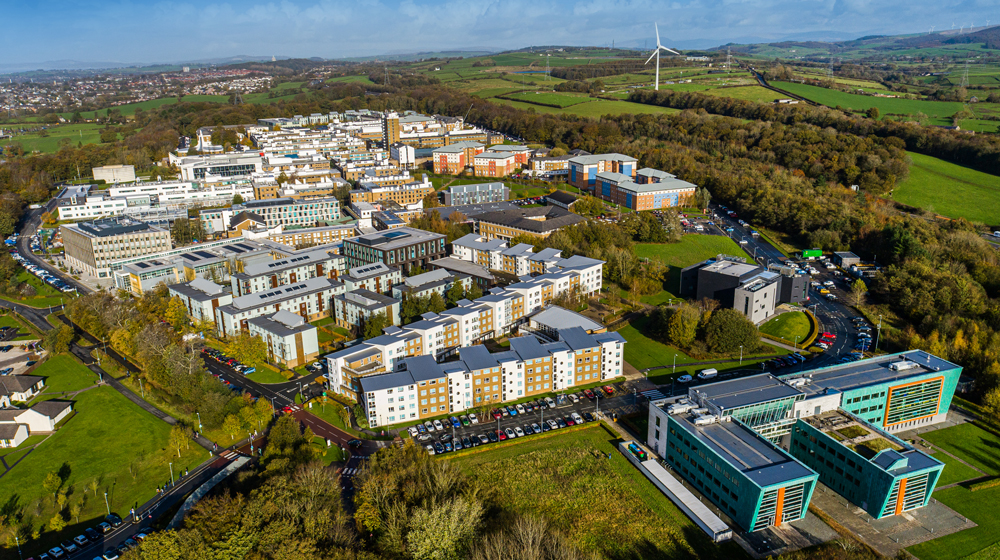
Global reputation and research excellence Lancaster is a top 10 UK university (Complete University Guide 2026) set on a 578‑acre parkland campus in n...


